
JournalVenues & places
Getting married in Spain: what UK couples need to know
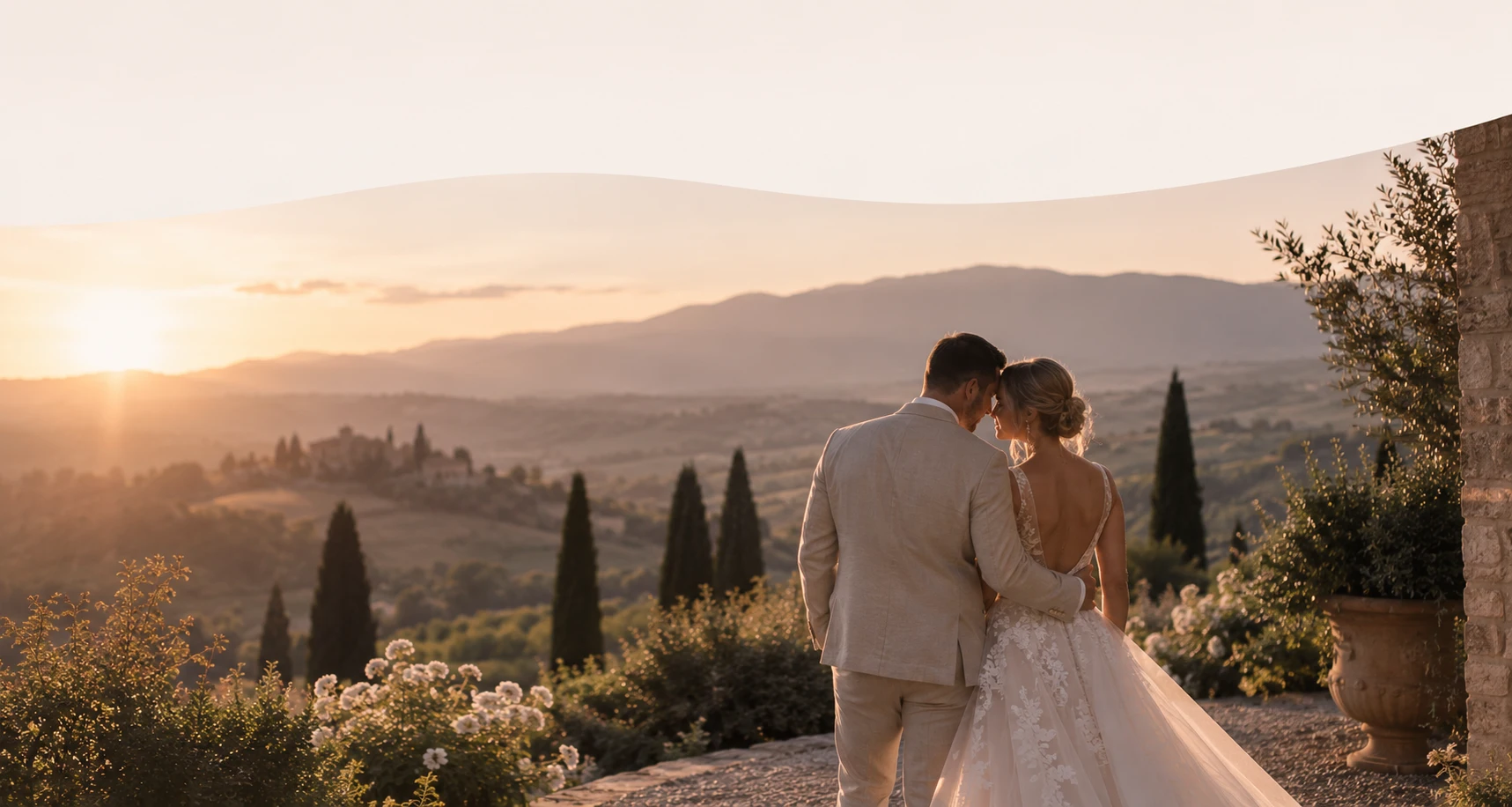
Long evenings, mountain views, a long table under festoon lights. It’s easy to see why so many UK couples dream of getting married in Spain. We’ve photographed and filmed weddings across Europe, including a September wedding this year at Racó del Pastor in the hills behind the Costa Blanca. Here’s what we’ve learned, and what we wish every couple knew before they started planning.
First things first: the legal bit
This catches a lot of couples out. According to the UK government’s guidance, to have a legal marriage in Spain you or your partner must live in Spain or be a Spanish national. In practice, registry offices usually expect proof of local residence, so couples who simply fly in for the wedding rarely have a Spanish civil ceremony.
The most common approach for UK couples is:
- Marry legally in the UK, usually a short, simple ceremony at a register office with two witnesses, a few days or weeks before you travel.
- Hold your “real” wedding in Spain as a symbolic or celebrant-led ceremony. There’s no Spanish paperwork, so you can write it exactly how you like.
Catholic church weddings in Spain are possible but involve your home parish, the Spanish diocese and several months of paperwork. If that’s your plan, speak to your priest early. Always check the latest gov.uk guidance, as the rules can change.
When to go: the weather
The Costa Blanca is warm for much of the year, but peak summer can be a lot for you and your guests in suits. Long-term averages for Alicante look roughly like this:
| Month | Average high | Approx. sunset |
|---|---|---|
| May | 23°C | 21:05 |
| June | 27°C | 21:25 |
| July | 30°C | 21:25 |
| August | 31°C | 20:55 |
| September | 28°C | 20:10 |
| October | 24°C | 19:20 |
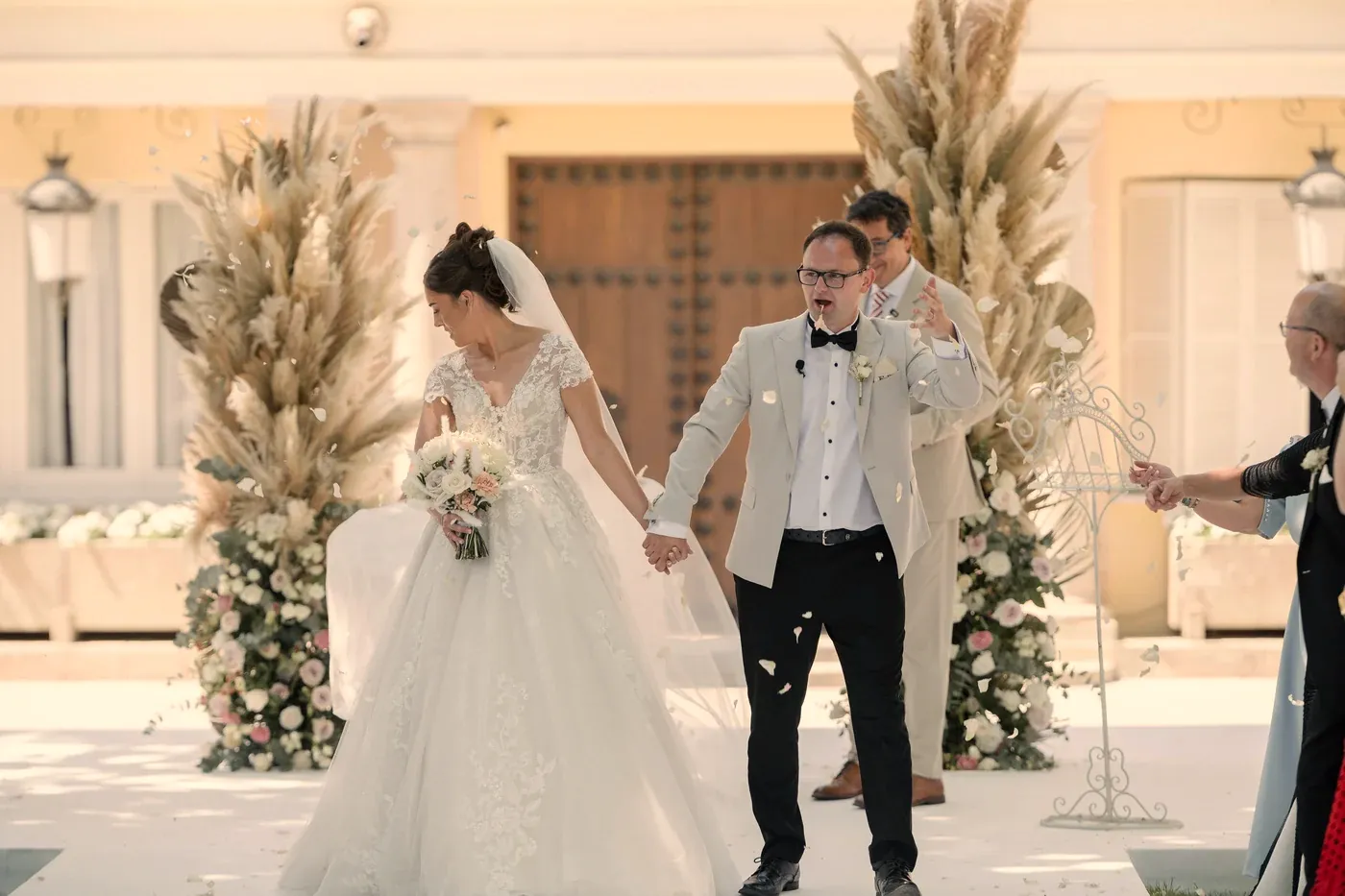
June and September tend to be the sweet spot: warm, reliable and not quite as fierce as July and August. And notice how late the sun sets compared with home. Spanish weddings naturally start and finish later, which works beautifully for photos.
Plan the day around the heat and the light
- Start later. A ceremony at 6 or 7pm avoids the hottest part of the day, and portraits happen in soft evening light.
- Find shade for the ceremony. Midday sun means squinting guests and harsh shadows on faces. Shade or a later start fixes both.
- Keep water and fans at the ceremony. Your guests will thank you.
- Golden hour is late. In June it can be after 8.30pm, often during dinner. Plan a ten-minute escape for portraits.
- Light the evening. Festoon lights and candles make the night glow on camera once the sun goes down.
Choosing a venue: a finca with a view
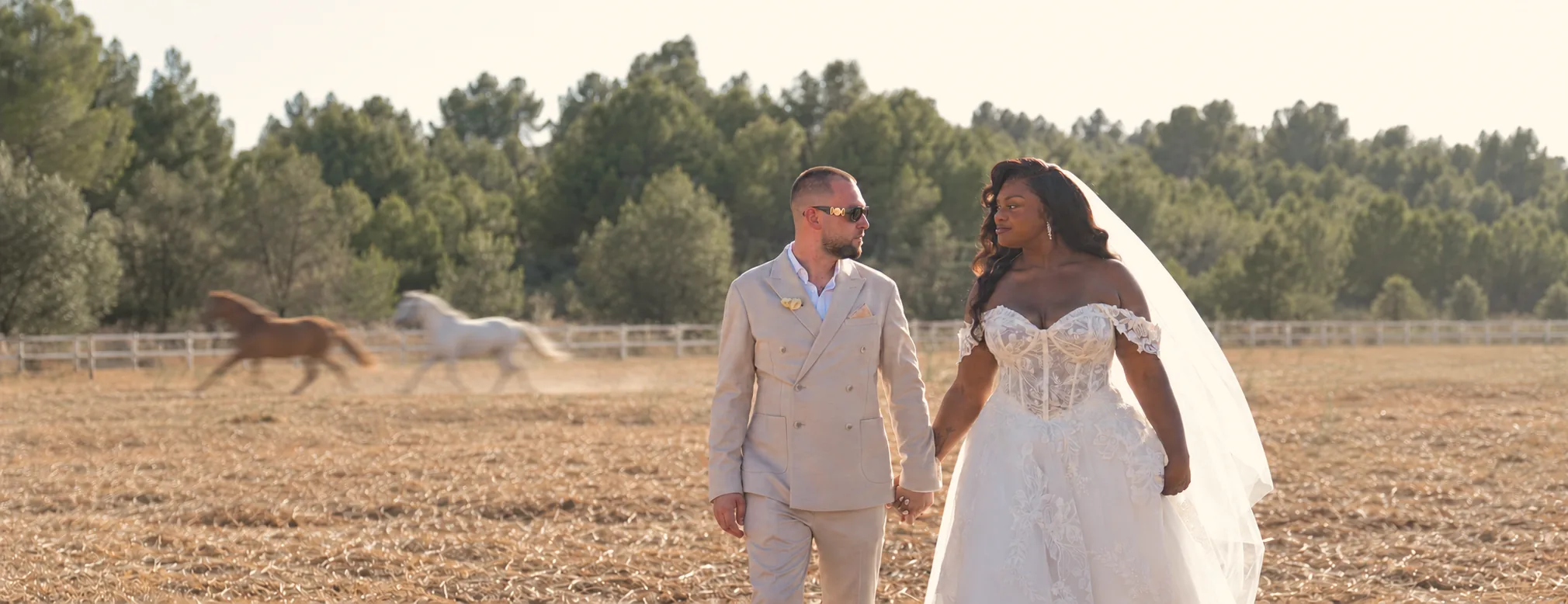
Many Spanish wedding venues are fincas: country estates with outdoor spaces, gardens and somewhere to celebrate under the stars. Racó del Pastor, in the village of Orba near Alicante, is a good example of what to look for. It was once a stud for Pure Spanish horses and is surrounded by mountains, with the ceremony space at the highest point of the estate and views over the orange-filled valley. Its courtyard is styled like a village square under festoon lights, and there’s a house on site for getting ready.
When you’re visiting venues (or browsing them online), think about:
- Where the sun will be at your ceremony time. Ask to see photos from the same time of year.
- A plan B for weather. Spain is sunny, not guaranteed. Is there a covered space?
- Getting-ready space on site, so you’re not travelling in the heat.
- Accommodation for guests nearby, and transport back at the end of the night.
- Noise curfews for music outside, which vary by venue and area.
- Catering rules. Many fincas require you to use their caterer.
Bringing your photographer and filmmaker from home
Lots of couples book a UK team for a destination wedding. It means you can meet beforehand, you know the style you’re getting, and there are no language barriers on the day. Travel and accommodation are usually added to the package, so ask for it to be quoted upfront.
We love destination weddings and have shot in Spain, Italy, France, Ireland and Thailand. Having a day or so either side also means we can scout the venue at the right time of day and, if you fancy it, do a relaxed portrait session once the wedding is done.
Destination wedding checklist
- Book your UK legal ceremony
- Choose a month that suits your guests (and the heat)
- Check plan B, curfews and catering rules
- Time your ceremony around the evening light
- Get travel costs for your suppliers quoted upfront
Planning a wedding abroad? Tell us where and when and we’ll let you know if we’re free.
Sources: gov.uk: Getting married in Spain; weather2travel Alicante climate; Racó del Pastor on Bodas.net. Sunset times approximate, for Orba mid-month.
Keep reading
More from the journal.
Luxury Wedding Venues: Are They Worth It? A Photographer’s View
What luxury venue hire really costs, what you get for the money, and when it is and isn't worth paying more.
Wedding Venues Essex: A Photographer’s Honest Shortlist
Five Essex wedding venues with very different personalities, what they offer, the registrar fees and what to check on your visit.
Do You Need a Book for Planning a Wedding? The 7 We’d Actually Buy
Guides, organisers and specialist books for speeches and readings, and which one or two are worth buying.
Planning your wedding?
Let’s hear about your day.
Tell us your date, your venue and what you have in mind. Photography, film, content creation, or all three.