

A country wedding venue, whether it’s a barn, a farm, an estate or a field with a marquee, can give you the most beautiful setting imaginable. It also raises questions a hotel or town venue answers by default: is it licensed for your ceremony, who runs the bar, how do guests get home at midnight, and what happens if it pours. This checklist covers what to ask at every viewing, and what to get in writing before you sign.
Take it with you, go through it with the venue coordinator, and don’t be shy. A good venue will have heard every one of these questions before and will have clear answers.
Is the country wedding venue licensed for your ceremony?
In England and Wales a civil ceremony has to take place at a register office or an approved venue, so this is the first thing to confirm. Essex County Council says the county has more than 130 venues licensed for legal marriage and civil partnership ceremonies, including converted barns, stately homes and castles, and publishes the full list online. Every council does the same, so check the list for the area your venue is in.
If a venue isn’t licensed, you can still marry there: you’d do the legal part at a register office, then have a celebrant-led ceremony at the venue on the day. Plenty of couples prefer it.
Outdoor ceremonies
Since 6 April 2022, approved venues in England and Wales have been able to hold civil ceremonies in their grounds, not just indoors. GOV.UK’s guidance for couples explains that the venue has to choose to offer this, and that the local authority must first confirm the outdoor spot is “seemly and dignified”. There’s no official register of which venues offer it, so ask each one directly.
Weather is the catch. GOV.UK advises venues to agree a back-up with you in advance, such as an approved indoor room or a covered structure. Essex County Council adds that the paperwork must be kept safe and dry for the ceremony to be legal, and that if the weather is bad the registrar decides whether it goes ahead outside.
Ask:
- Is the venue on the council’s approved list, and which rooms or outdoor spots are approved?
- What’s the wet weather plan, and can we see that space set up?
- Have you already booked registrars for our date, or do we do that? (Essex County Council says it accepts bookings up to two years in advance.)
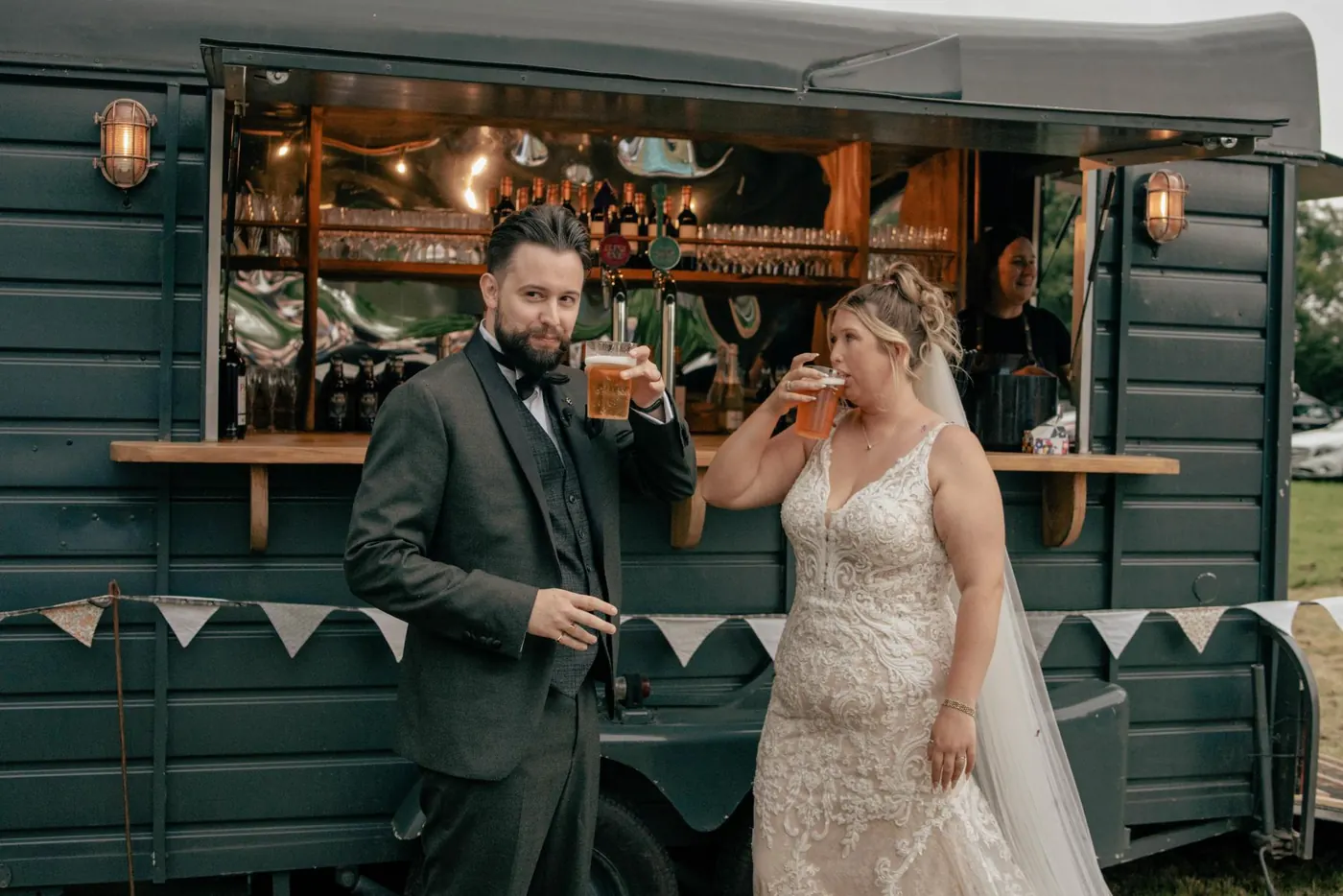
The bar, catering and suppliers
Many country venues are “dry hire”, meaning you get the space and bring in everything else. That can save money and give you freedom, but it means more to organise.
Alcohol licensing. If the venue doesn’t hold a premises licence, whoever sells alcohol needs another way to do it legally, often a Temporary Event Notice (TEN). Council guidance sets out the main rules: no more than 499 people at a TEN event at any one time, including staff, and the notice must be given at least 10 clear working days before the event. Tower Hamlets Council lists the fee as £21 per notice and recommends applying 28 days ahead. In practice a mobile bar company often handles this, but ask who is responsible, and get it confirmed.
Ask:
- Is there a premises licence, or does the bar need a TEN? Who applies for it?
- Is there a closed supplier list, or can we bring our own caterer, bar and florist?
- Is there a corkage charge if we supply our own drinks?
- Do suppliers need their own public liability insurance, and how much cover do you ask for?
- What are the set-up and clear-down times, and can suppliers arrive the day before?
Power, water and toilets
These are the unglamorous questions that matter most at rural sites.
- Power: Is there mains power for the band, DJ, catering and lighting all at once, or will you need a generator? Who supplies it, and who pays for fuel?
- Water: Is there running water for the caterers and bar?
- Toilets: Are there permanent loos, and enough for your guest numbers? If not, you’ll need to hire trailers.
- Kitchen: Is there a prep space, or does the caterer need to bring a field kitchen?
Getting there and getting home
- Access: Can a coach, a vintage car or a catering lorry get down the lane? Does the postcode take satnavs to the right gate?
- Parking: Is it on grass, and what happens to it after a week of rain?
- Getting home: Rural taxis can be scarce late at night. Ask what other couples have done, and think about a minibus. If guests are travelling, a venue with rooms on site or nearby helps hugely; our guide to wedding venues with accommodation goes into this.
- Accessibility: Are paths level and lit? How will older guests or anyone with limited mobility get from the ceremony to the reception?
Time, noise and neighbours
- What time does music have to finish, and does amplified music have to move indoors after a certain hour?
- Is there a sound limiter? Bands need to know this before they quote.
- When do guests have to leave the site, and when does clear-up have to be finished?
- Can you stay overnight, or come back the next morning for your things?
Light, weather and your photos
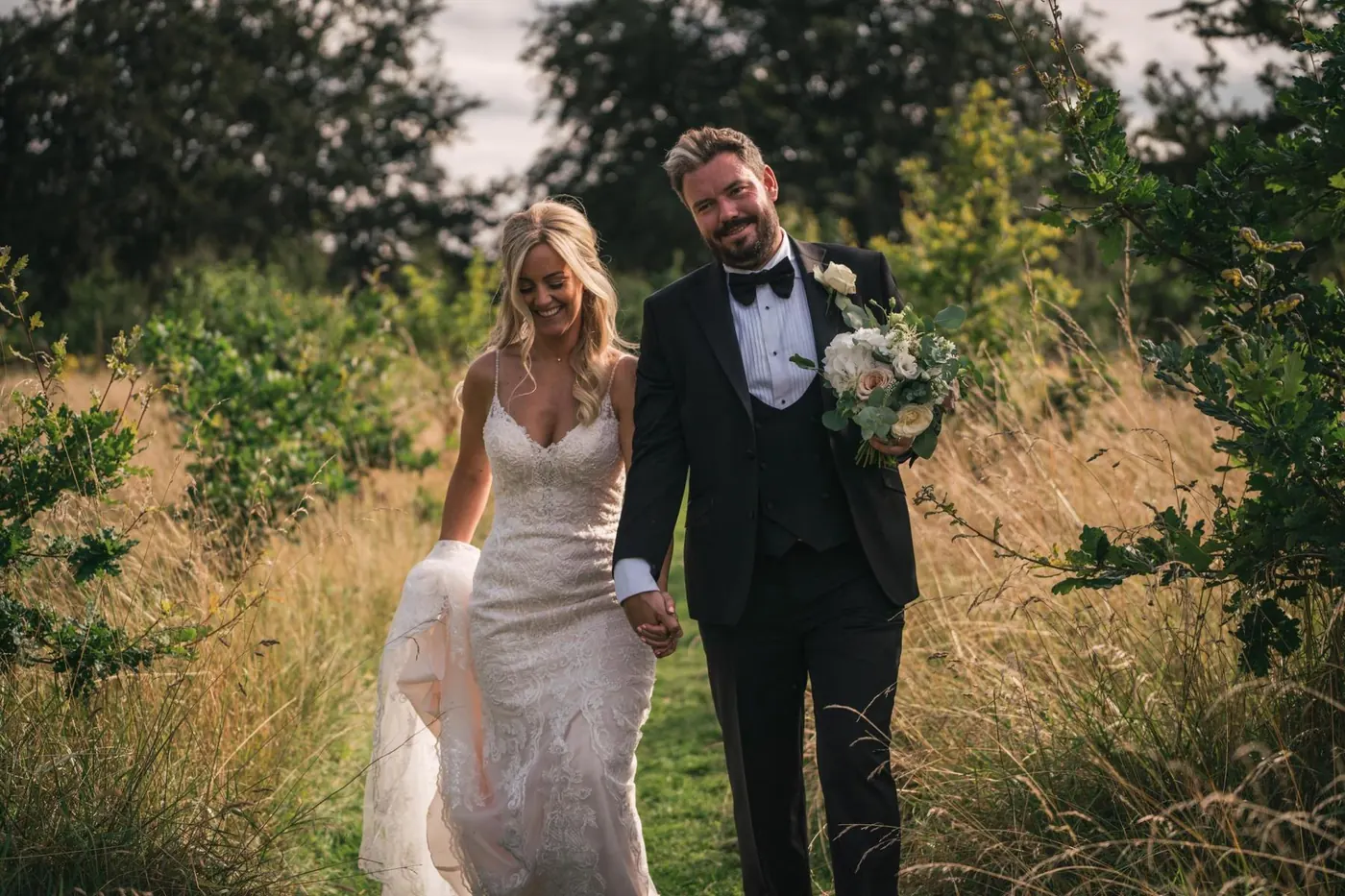
Country venues can be wonderful for photos and film: open fields, hedgerows, big skies and soft evening light. A few questions will help you make the most of it.
- Where can we go for portraits within a short walk, and is any of it out of bounds (crops, livestock, private land)?
- What does the land look like in our month? A summer meadow can be a muddy stubble field by autumn.
- What happens after dark? Festoon lights, lit paths and heaters make a huge difference in a barn, marquee or tipi, for guests and for the camera.
- When is sunset on our date? Look it up and plan a ten-minute portrait slot around it. Our wedding day timeline shows how to fit that in without losing time with guests.
If you’re drawn to the barn and farmhouse look in particular, our guide to rustic wedding venues covers the common pitfalls in more detail.
Get these in writing before you sign
| Item | What to check |
|---|---|
| What’s included | Furniture, linen, staffing, lighting, heating, cleaning |
| Exclusive use | Whether anyone else is on site that day |
| Payments | Deposit, payment dates and any damage deposit |
| Cancellation and postponement | What you lose, and what happens if the venue cancels |
| Ceremony licence | Which spaces are approved, and the wet weather plan |
| Bar licensing | Premises licence or TEN, and who is responsible |
| Timings | Access, set-up, music curfew, finish and clear-down |
| Supplier rules | Closed lists, corkage, insurance requirements |
One more question worth asking
Ask the coordinator what usually catches couples out at their venue. It’s a disarming question, and the honest answer will tell you a lot about the place and the people running it.
The bottom line
A country wedding venue rewards a little extra homework. Confirm the ceremony licence, understand who handles the bar, check the power, toilets and transport, and get the timings and wet weather plan in writing. Then you can relax and enjoy the setting you fell for.
If you’ve found your venue and want a photo and film team who loves big skies and golden hour, take a look at our packages or get in touch.
Sources: GOV.UK: Guidance for couples, outdoor civil marriage and civil partnership ceremonies; Essex County Council: Approved venues; East Suffolk Council: Temporary event notice rules; North Northamptonshire Council: Temporary event notices; Tower Hamlets Council: Temporary events notice. Checked November 2026.
Related guides
More on venues.

Cheap Wedding Venues: Where to Look When the Budget Is Tight
Real 2026 prices for pubs, village halls, register offices and off-peak dates, plus the hidden costs to check.
Rustic Wedding Venues: How to Get the Look Without the Pitfalls
Barns, farms, tipis and woodland: the legal points, practical checks and how to get the rustic look anywhere.
Cheap Wedding Venues London: How to Marry in the Capital for Less
Where the real savings are in London, from statutory town hall ceremonies to pubs on a minimum spend, with 2026 fees and the hidden costs to watch.
Planning your wedding?
Let’s hear about your day.
Tell us your date, your venue and what you have in mind. Photography, film, content creation, or all three.