
How to Become a Celebrant in the UK (and What It Pays)
If you’re wondering how to become a celebrant in the UK, the short answer is that there’s no single official route. In England and Wales you don’t need a licence or a formal qualification to lead a celebrant ceremony: most people take a private training course, build experience and work self-employed. The catch is that, as of November 2026, a ceremony led by an independent celebrant in England or Wales isn’t legally binding on its own, although the government has just consulted on changing that.
As for what it pays, it varies a lot. The National Careers Service lists both salary and hours as “variable”, because most celebrants are self-employed and paid per ceremony. Below we cover the legal picture, the main training routes, what celebrants typically charge, and what the day-to-day work involves.
What a celebrant actually does
A celebrant writes and leads a personal ceremony: a wedding, a vow renewal, a naming or a funeral. According to the National Careers Service job profile, the work includes meeting couples and families to plan the ceremony, advising on venues, music and timings, helping people write vows, tributes or readings, running a rehearsal, leading the ceremony itself, advising on legal obligations such as registering a marriage, and marketing your own business.
From where we stand, usually a few rows back with a camera, the best celebrants share a few things. They know the couple’s story well enough to tell it warmly, they speak clearly enough for the back row to hear, and they understand the practical choreography of a ceremony: where people stand, when to pause for the ring exchange, and when to step aside so the first kiss isn’t photographed over their shoulder.
Can a celebrant legally marry you in England and Wales?
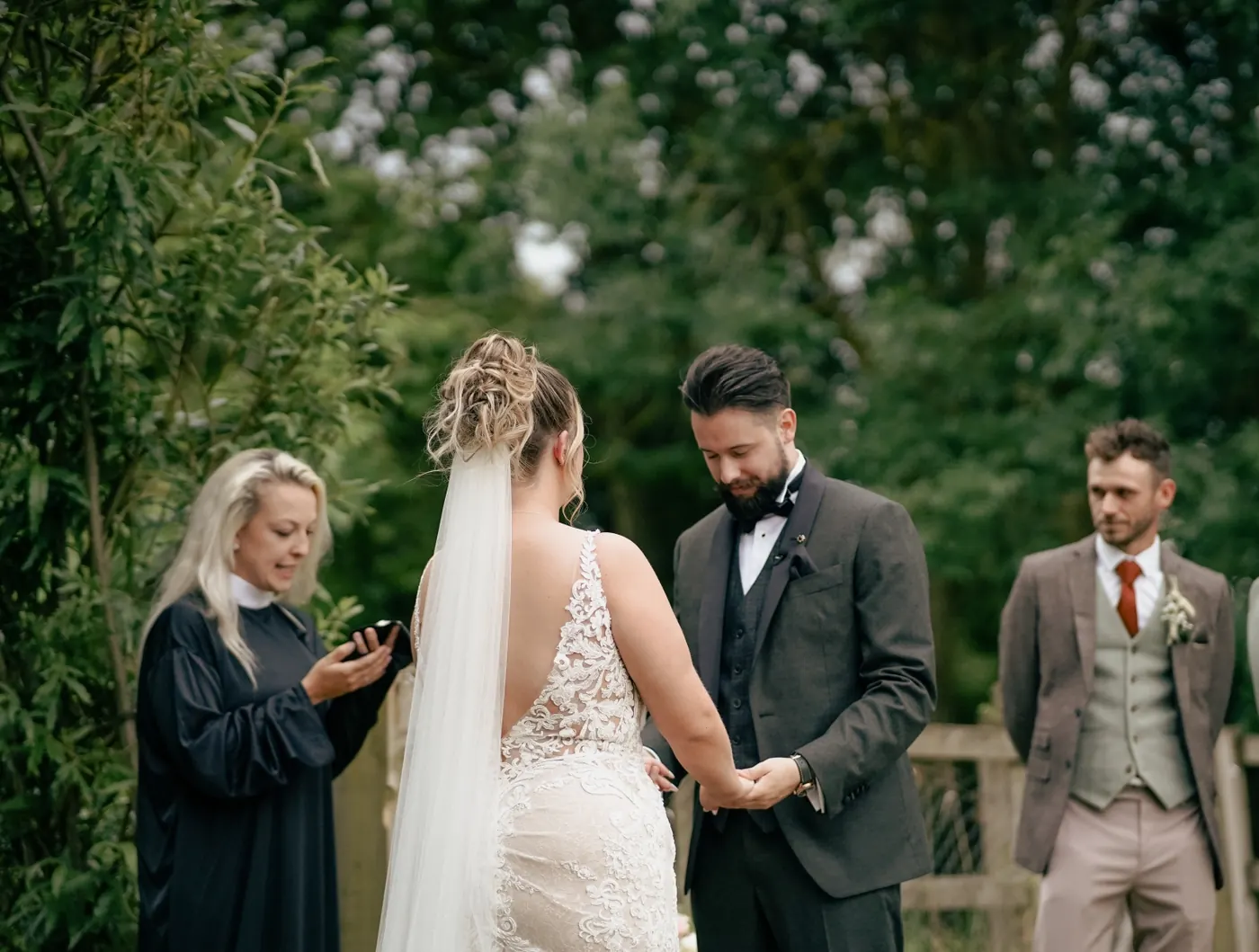
Not yet. Under the current law, couples in England and Wales who want a celebrant ceremony also need a separate legal ceremony with a registrar or an authorised religious officiant. Bridebook sums it up: a celebrant ceremony “is not legally binding on its own”. The government’s own consultation page goes further and notes that non-religious belief organisations, such as Humanists, “cannot conduct legally binding weddings at all”. Its consultation document says couples who want a belief-based ceremony can feel compelled to pay for two ceremonies.
Scotland is different. Bridebook notes that some celebrants there, particularly humanist celebrants, are legally authorised to marry couples, so a ceremony can be legally binding if the celebrant is registered.
What’s changing
The Law Commission published its final report on weddings law on 19 July 2022, and the government gave its full response on 2 October 2025. On 16 July 2026 the Ministry of Justice opened a consultation called “Tying the knot: reforming weddings law in England and Wales”, which closed on 24 September 2026.
The proposals would move the system away from regulating the building a wedding takes place in and towards regulating the officiant. The consultation proposes allowing independent officiants to conduct legally binding weddings, with entry requirements including a “fit and proper” test, and oversight by an independent regulator. Non-religious belief organisations would also be able to conduct legal weddings for the first time.
When we checked in November 2026, the government said it was analysing the responses. No date had been set for new law. If you’re training now, expect the rules on authorisation and standards to change, and keep an eye on the gov.uk consultation page for the outcome.
How to become a celebrant: the main routes
The National Careers Service says you can get into the job through a private training course. Courses vary in length, cost and entry requirements, and some lead to a nationally recognised celebrancy qualification. Formal qualifications aren’t required, though training may help your career prospects, and you’ll need to pass background checks. Experience in wedding or event planning can help but isn’t essential.
In practice there are two broad paths.
1. Independent celebrant training
Several private providers run wedding, funeral and family celebrancy courses, online or in person, often leading to a certificate or diploma. The National Careers Service lists NOCN Level 3 funeral celebrancy courses as one example of a recognised qualification. Because there’s no regulator yet, compare providers carefully: ask what the course covers (ceremony writing, public speaking, the legal side, running a business), how much live practice you get, and whether there’s support once you’ve finished.
2. Joining a belief organisation
Humanists UK trains celebrants for its Humanist Ceremonies network in England, Wales, Northern Ireland and the Channel Islands (Scotland has its own organisation, Humanist Society Scotland). You must identify as a humanist, become a member if you aren’t one, apply and have a video interview. Wedding and funeral training runs in three stages roughly a month apart: a one-day induction, then two stages of two days each with an overnight residential. There’s a non-refundable £550 deposit, with the balance paid in one go or in instalments, and a bursary scheme is available. Once accredited you pay a quarterly accreditation fee, which covers insurance and branded stationery.
Before you pay for a course
Go to a few celebrant-led ceremonies if you can, and talk to working celebrants about how many bookings it took to cover their costs. It’s a lovely job, but it’s also a small business, and the marketing side is a big part of it.
How much do celebrants earn?
There isn’t a reliable official salary figure, because most celebrants are self-employed and paid per ceremony. The National Careers Service lists pay and hours as variable, says work depends on customer demand, and notes that many celebrants combine it with another career such as wedding planning, events management or funeral directing.
What we can point to is what couples pay. Bridebook says a UK wedding celebrant typically costs between £400 and £900. That fee has to cover the meetings, writing, rehearsal, travel and the day itself, and a single wedding can involve many hours of work before anyone walks down the aisle. Out of it come your own costs: training, insurance, any membership or accreditation fees, a website and advertising.
In other words, celebrancy can be a rewarding side business or a full-time career once you’re well known locally, but it’s rarely a quick route to a steady income.
Skills that make a good celebrant
- Listening and interviewing. The ceremony is only as personal as the questions you ask beforehand.
- Writing. Turning a couple’s story into something warm, funny and the right length.
- Speaking. Confidence, pace and projection, often outdoors and without a microphone.
- Organisation. Timings, rehearsals and coordinating with venues, musicians and photographers.
- Business basics. Pricing, contracts, insurance and marketing. The National Careers Service lists business management and computer skills among the core skills.
Working well with the rest of the wedding team
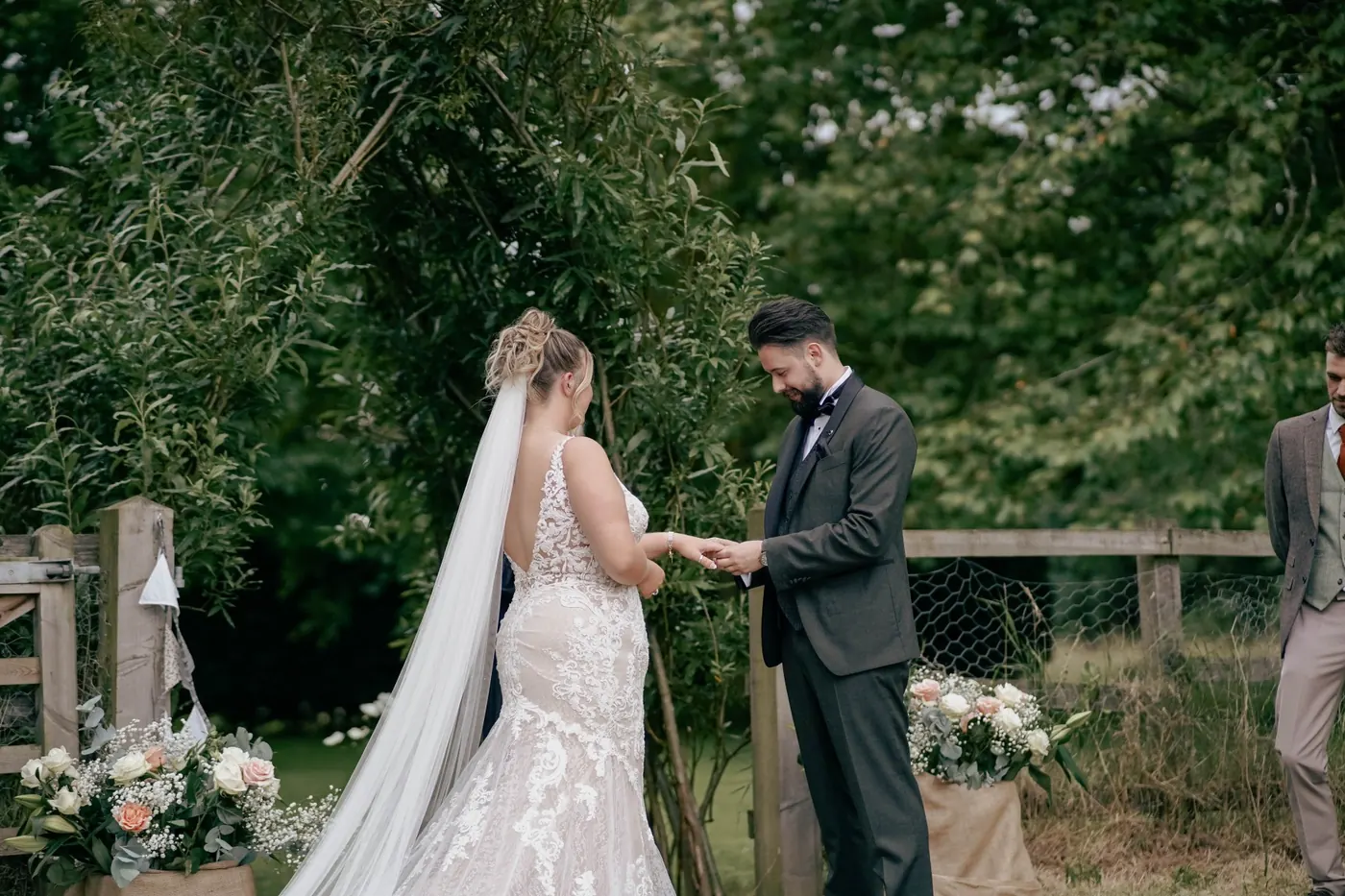
One thing courses don’t always cover is how much a celebrant shapes the photos and film. A quick chat with the photographer before the ceremony about where you’ll stand, and stepping to one side for the vows, rings and first kiss, makes a real difference to what the couple gets back. If you’re a couple planning a celebrant-led day, our guide to planning a wedding day timeline for photos and film shows where the ceremony fits.
And if you’re planning a wedding with a celebrant and would like it captured, have a look at our packages or drop us a line. We’d love to hear about it.
Sources: National Careers Service: Celebrant job profile; GOV.UK: Tying the knot, reforming weddings law in England and Wales; Law Commission: Weddings; Humanists UK: Become a celebrant; Bridebook: Wedding celebrants. Checked November 2026.
Related guides
More on ceremony & legal.
How Much to Get Married in a Registry Office? Every Fee Explained
Every fee for a register office wedding in England and Wales, from the £62 statutory ceremony to weekend rooms and venue registrars.
What Is Civil Partnership? The Plain-English Answer Every Couple Should Read
What a civil partnership is, who can have one, how it differs from marriage, and how to plan the day.
Planning your wedding?
Let’s hear about your day.
Tell us your date, your venue and what you have in mind. Photography, film, content creation, or all three.