
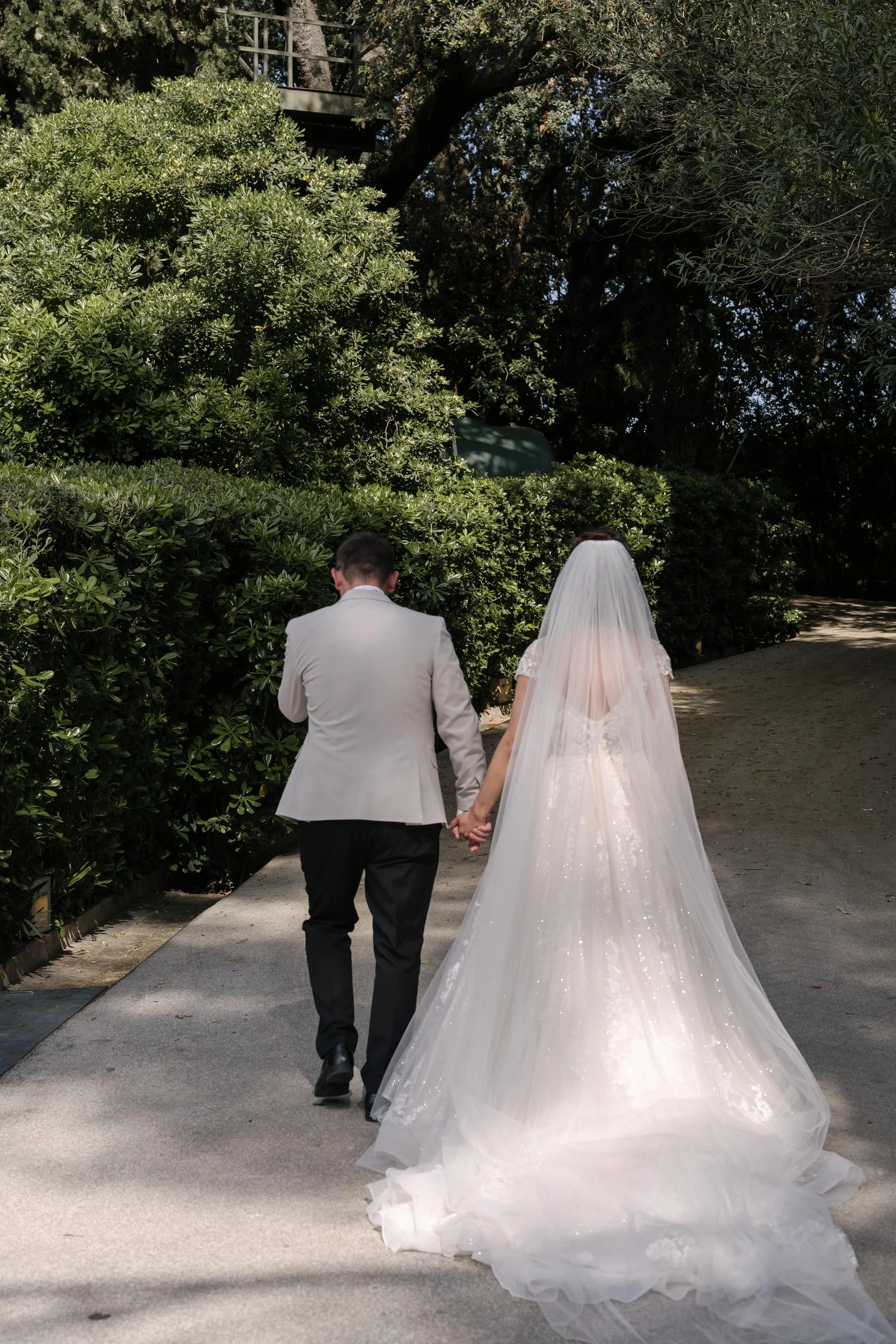
How to Choose a Wedding Dress That Looks Even Better in Photos
You’ll wear it for one day, but you’ll see it in photos for the rest of your life. So when you’re choosing a wedding dress, it helps to think about how it moves, how it handles the weather and how it looks on camera, not just in the changing-room mirror. Here’s how to choose with confidence, with practical tips from behind the lens.
When to start shopping
Start looking roughly nine to twelve months before your wedding. Made-to-order and bespoke gowns typically take around six months to arrive before fittings even begin, and alterations need time too. High-street and off-the-peg dresses are quicker if you’re planning a short engagement.
Set your budget (including the extras)
Bridebook’s 2026 report puts the average UK wedding dress at £1,532, with most couples spending between £500 and £2,000. Put aside another £200 to £500 for alterations, plus veil, shoes, underwear and accessories.
| Where you buy | Typical price |
|---|---|
| Off-the-peg, sample sales, outlets | £100 to £700 |
| High street | £100 to £1,000 |
| Bridal boutique | £1,200 to £2,500 |
| Designer | £2,000 to £5,000+ |
| Bespoke | £2,500+ |
Think about your venue and season first
- Barn or countryside: lighter fabrics, less train to drag through grass, maybe boots or block heels.
- Church or grand country house: a cathedral train and structured fabrics can look incredible down a long aisle.
- Registry office or city wedding: shorter, sleeker shapes, jumpsuits or two-pieces work beautifully.
- Winter: sleeves, heavier crepe or velvet, and a cape or coat for outdoor photos.
- Summer: breathable fabrics and a style you can actually dance in when it’s 25°C.
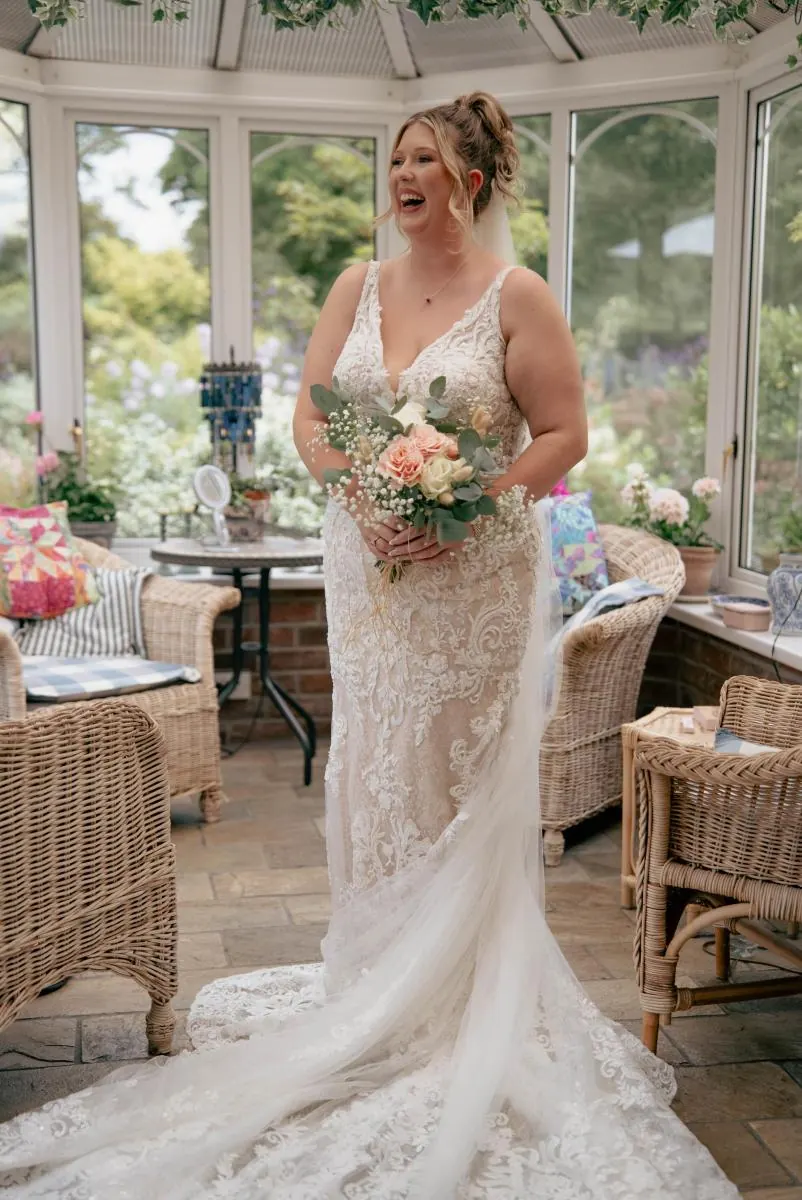
How to choose a wedding dress that looks even better in photos
Movement matters
Some of the best wedding photos and film are of you walking, spinning on the dance floor or catching the wind on a hill. Fabrics like chiffon, tulle and soft crepe move beautifully. Try walking, sitting and twirling in every dress you try on.
Watch out for shine
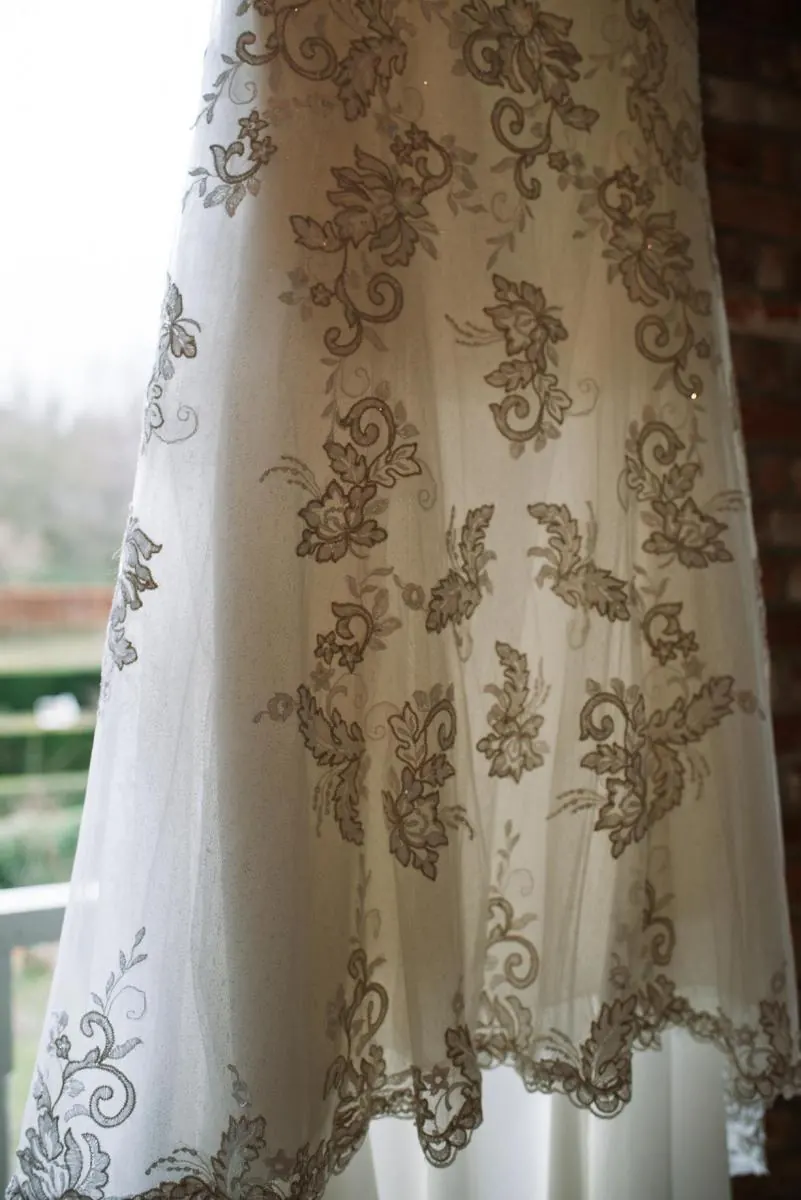
Very shiny satin can reflect light and lose detail in bright sunshine. Matte fabrics and textured lace usually photograph with more depth.
Check the back
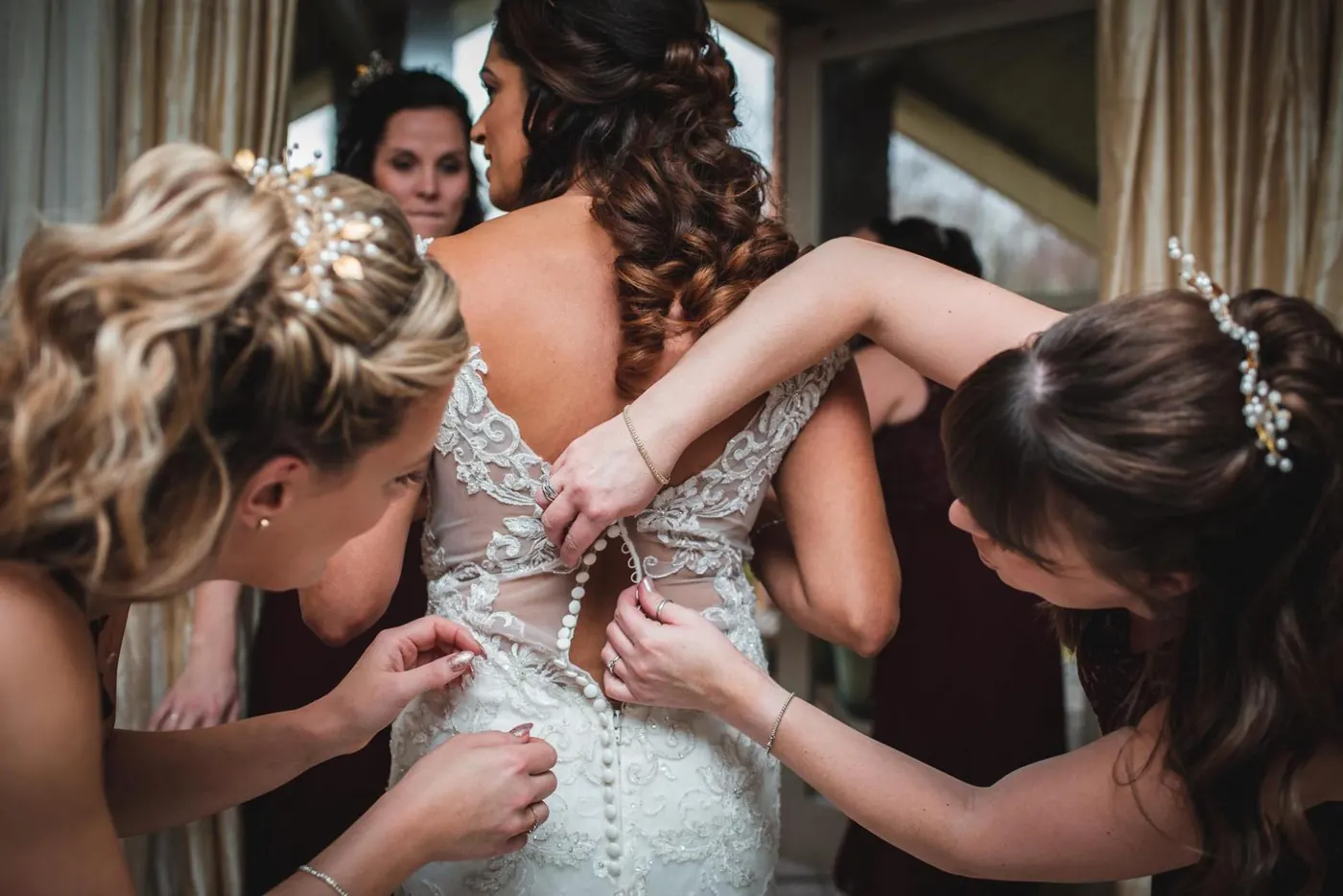
Half your ceremony photos will be taken from behind. Low backs, buttons and interesting details make those shots special.
Mind the straps and fit
A dress that slips or needs constant adjusting shows up in candid photos. Make sure you can lift your arms, hug people and sit down to eat.
A tip from the photographers
Ask the shop to take a phone photo of you in your favourite dresses from a few metres away, in natural light if possible. It’s a surprisingly good preview of how the dress will look on the day.
Making the appointment count
- Book weekday appointments if you can: they’re usually calmer.
- Bring two or three people whose opinions you trust, not ten.
- Wear nude, seamless underwear and bring the height of heel you’ll wear.
- Save photos of styles you like, but stay open. Many people end up loving something they’d never have picked off a hanger.
- Ask about lead times, the alteration process and who handles it before you pay a deposit.
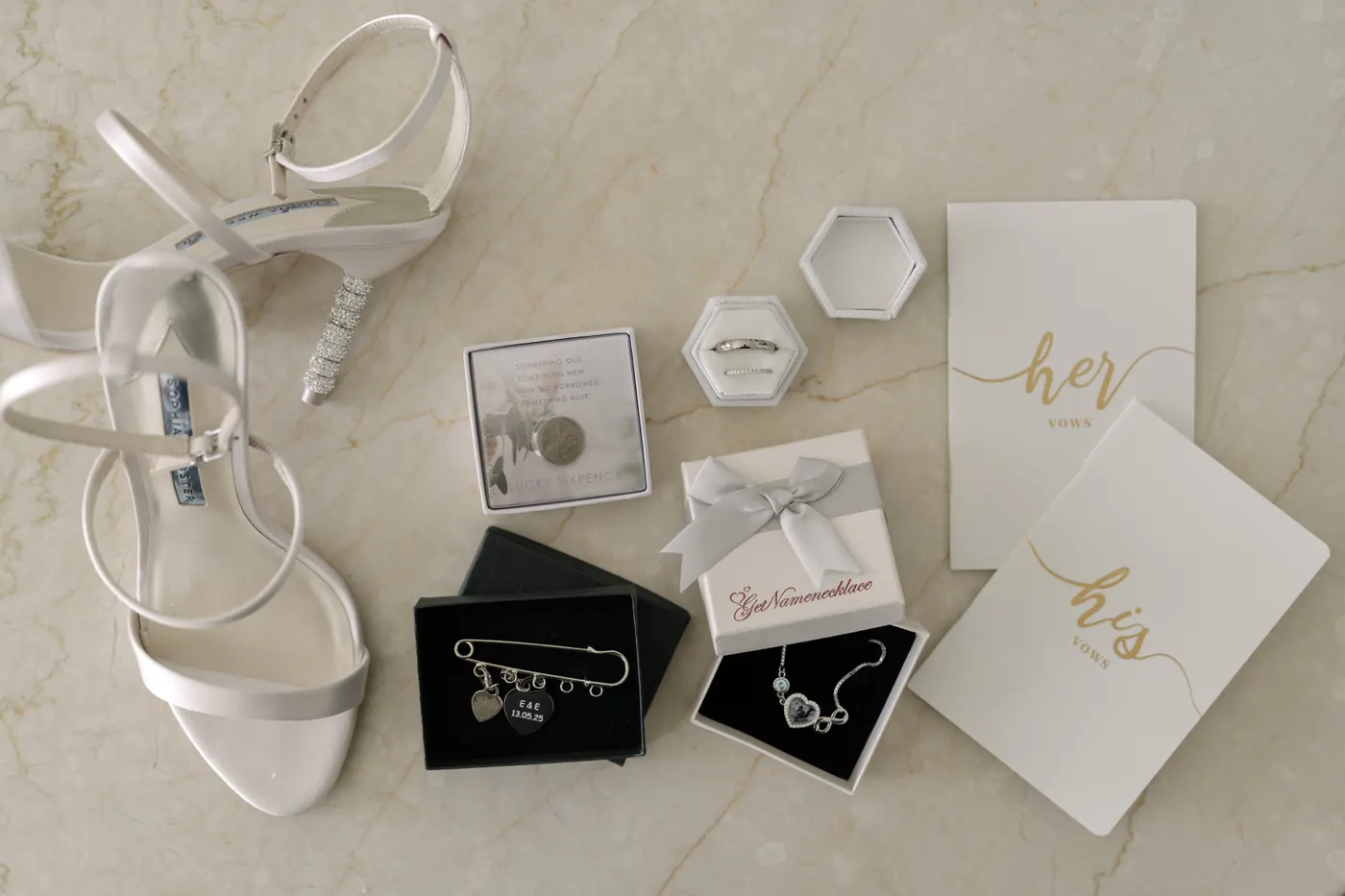
After you say yes to the dress
Book fittings for about two to three months before the wedding, with a final fitting a couple of weeks out. Ask about a bustle if you’ve chosen a train: you’ll want both hands free for the evening.
Planning the rest of the day? See our guide to planning your wedding timeline, or tell us about your wedding.
Sources: Bridebook: How much does a wedding dress cost? (2026 UK Wedding Report). Figures checked October 2026.
Related guides
More on dresses & suits.
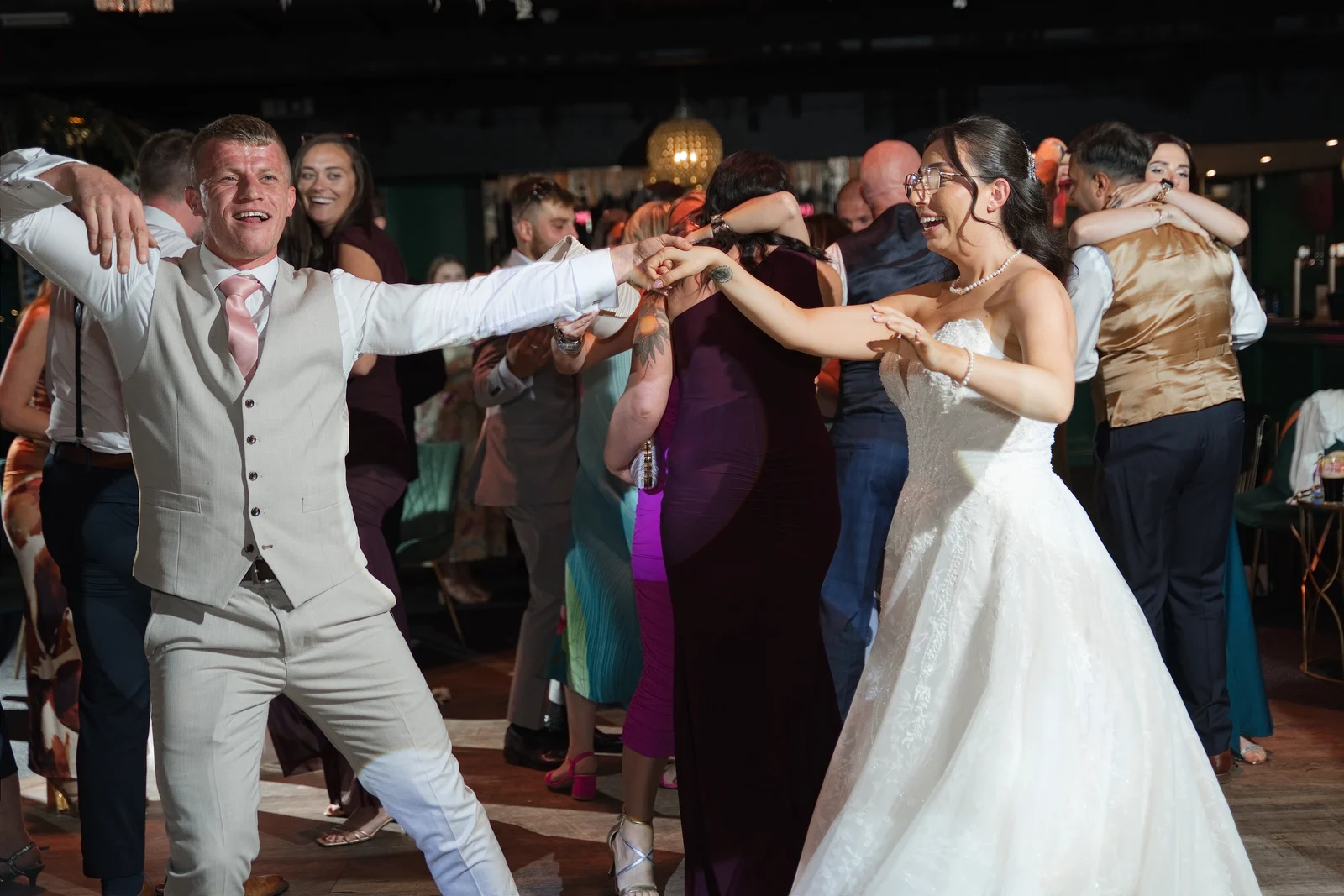
Wedding Guest Dresses UK: How to Pick One for Any Dress Code
Every UK dress code decoded for guests, plus colours to avoid, hats, church rules and seasonal tips.
Winter Wedding Dresses: Sleeves, Capes and Cosy Fabrics
Sleeves, capes, warm fabrics, shoes and daylight planning for a dress that works on a cold UK wedding day.
Summer Wedding Guest Dress Ideas That Survive a Heatwave
Fabrics, colours, shoes and sun protection for staying cool and looking fresh at a hot summer wedding.
Planning your wedding?
Let’s hear about your day.
Tell us your date, your venue and what you have in mind. Photography, film, content creation, or all three.