
JournalWedding planning
Why keep your wedding speeches?
You will probably remember who made you laugh during the wedding speeches. The exact sentence, the pause before it and the sound of the room joining in are harder to hold on to. That is where a complete speech film earns its place alongside your highlights.
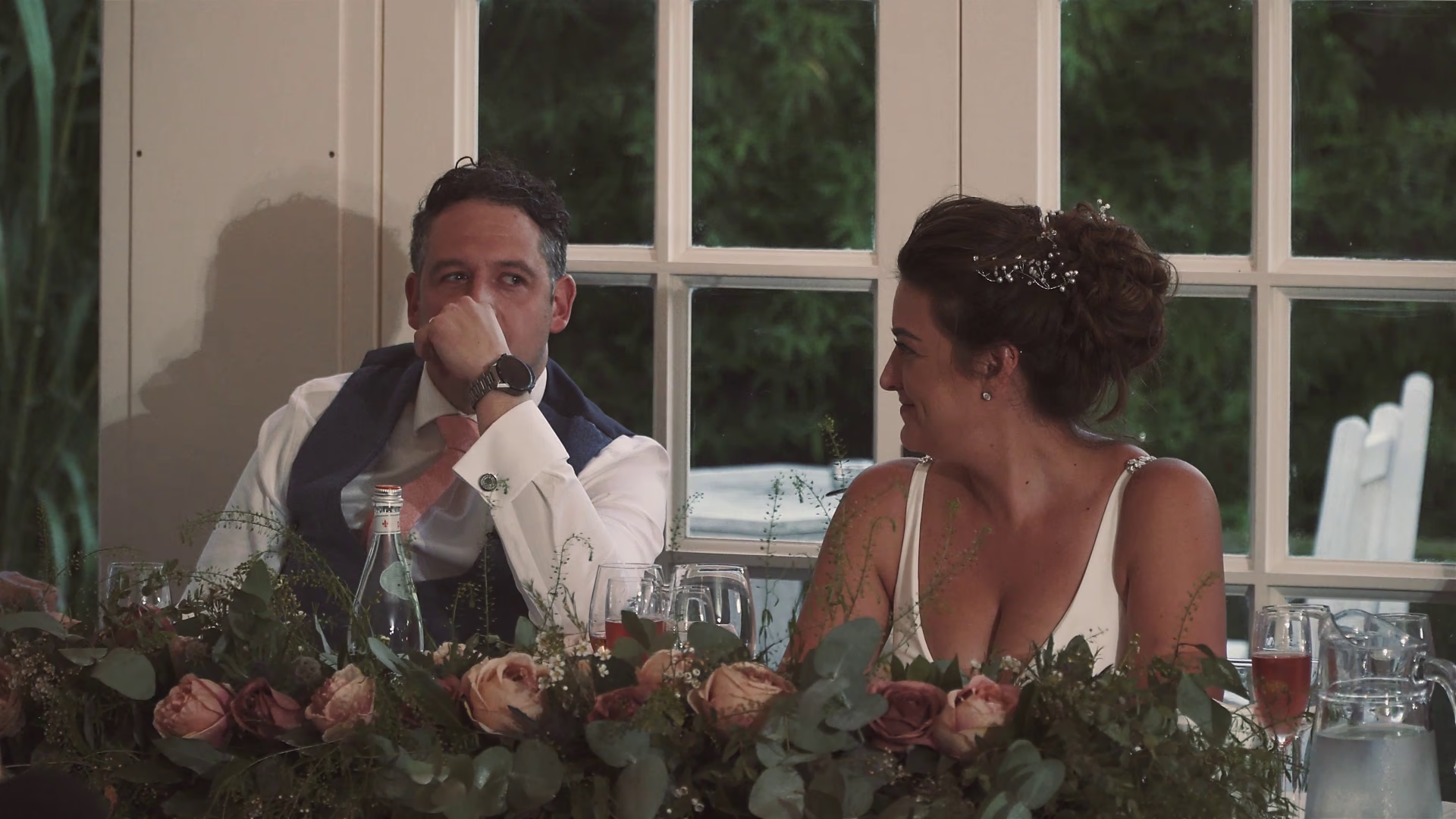
We have been looking back at Jo and Andy’s September 2019 wedding, which took them from Colchester Town Hall to a reception at Le Talbooth in Dedham. The speeches are one of the things we remember most clearly from filming it. There was real warmth in the room, and the guests’ reactions gave us as much to watch as the people speaking.
Their wedding offers a useful starting point for a question couples often need to settle when choosing their films: do you want selected words woven into a short edit, the speeches kept in full, or both?

Your highlights and your speeches do different jobs
A highlights film brings the wedding together. It moves between places, people and moments, choosing what to stay with and what to leave for another time. A line from a speech can be a wonderful thread through that edit, playing over a glance during the ceremony or a quiet moment together later.
A full speech film gives the words their original space. You can follow the story from its beginning, hear the explanation behind a joke and stay with the thank-yous. The value is often in something that would be too long, or too personal to everyone in that room, to make sense inside a short highlights film.
Jo and Andy received complete ceremony and speech films as well as their shorter edits. For them, the nine-minute highlights and extended 27-minute version were different ways to return to the wedding. The full speeches kept another part of it available. That was their particular commission; when comparing current wedding film packages, check the actual inclusions rather than assuming every collection works the same way.
The reaction belongs with the words
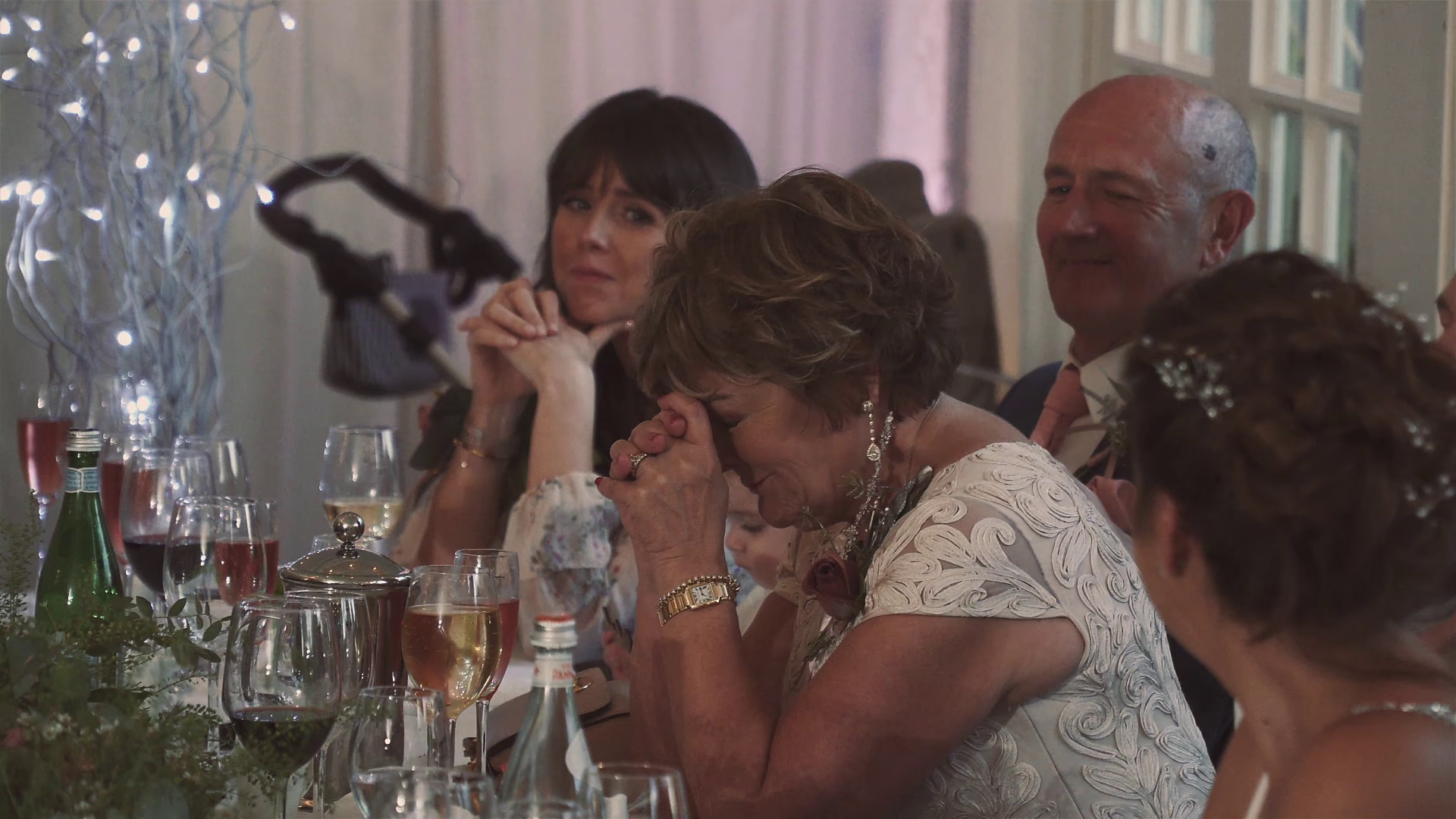
Think about a speech you have loved. It is rarely only the speaker you remember. It might be the person trying not to cry, someone recognising a story before anyone else or the couple exchanging a look across the table.
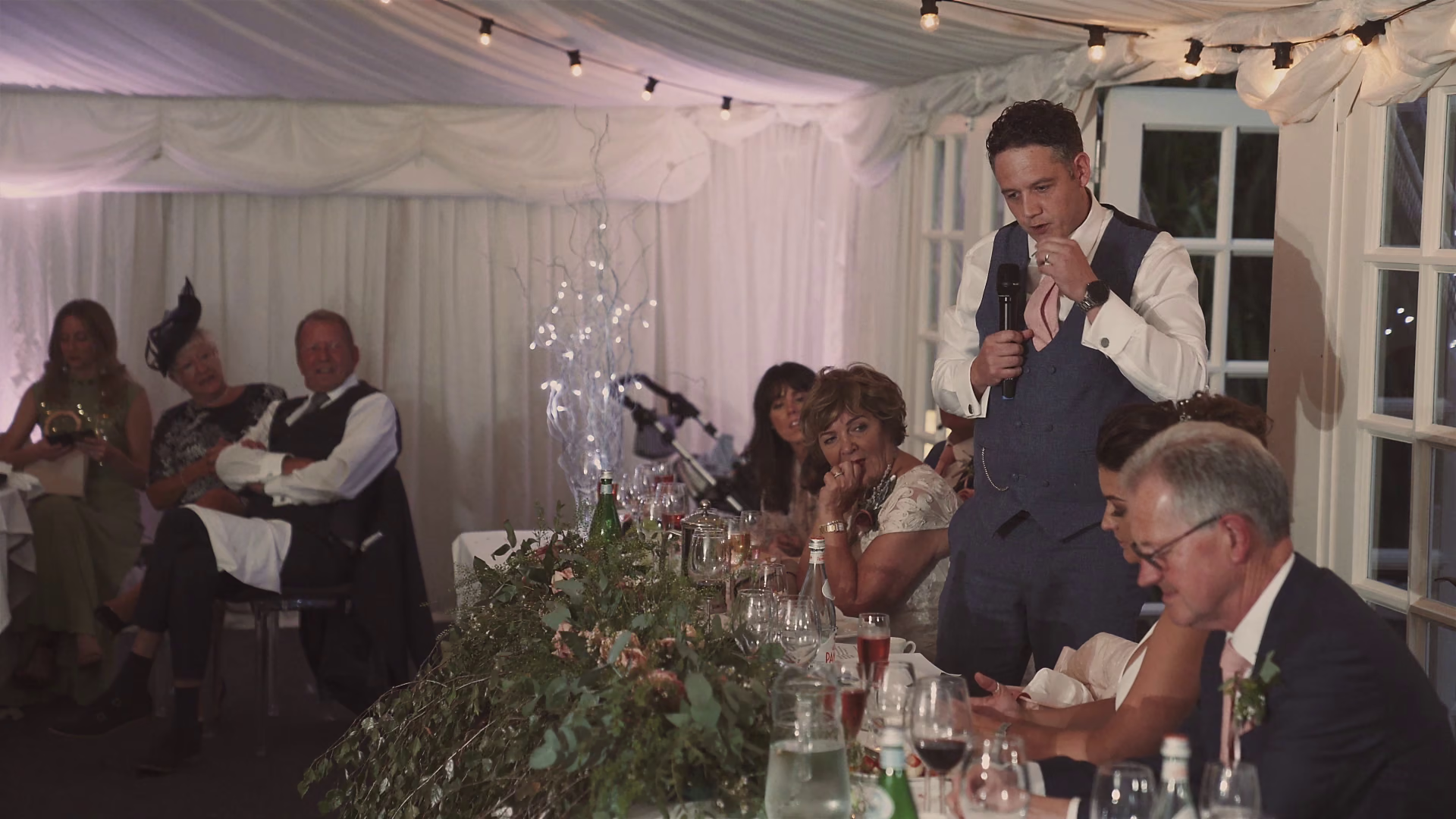
The stills from Jo and Andy’s reception show exactly that. Andy has his turn with the microphone; elsewhere, guests listen, smile and become emotional. Filming those responses helps preserve the feeling of being there. A clear view of the speaker matters, but so does the room they are speaking to.
Let your filmmaker know who will be speaking and flag anyone whose reaction is especially important to you. It is useful context, rather than a request to stage anything. Coverage can then be planned around the people who matter most.
A little planning makes a difference to the sound
The words need to be audible if you are going to enjoy them years later. Before the wedding, introduce your filmmaker to whoever is managing the venue’s microphones or sound system. Share when the speeches are expected to happen, where the speakers will stand and whether there are likely to be any changes of location.
At a reception with several speakers, using the agreed microphone consistently helps everyone in the room hear, as well as helping the recording. If someone would prefer to speak from their seat or has planned a surprise, pass that on privately in advance. Your filmmaker can explain what is practical for the space and their recording setup.
These are small conversations to have before the day. They are much easier than trying to solve a sound problem once someone has already begun a story that will only be told once.
Let the speech sound like its speaker
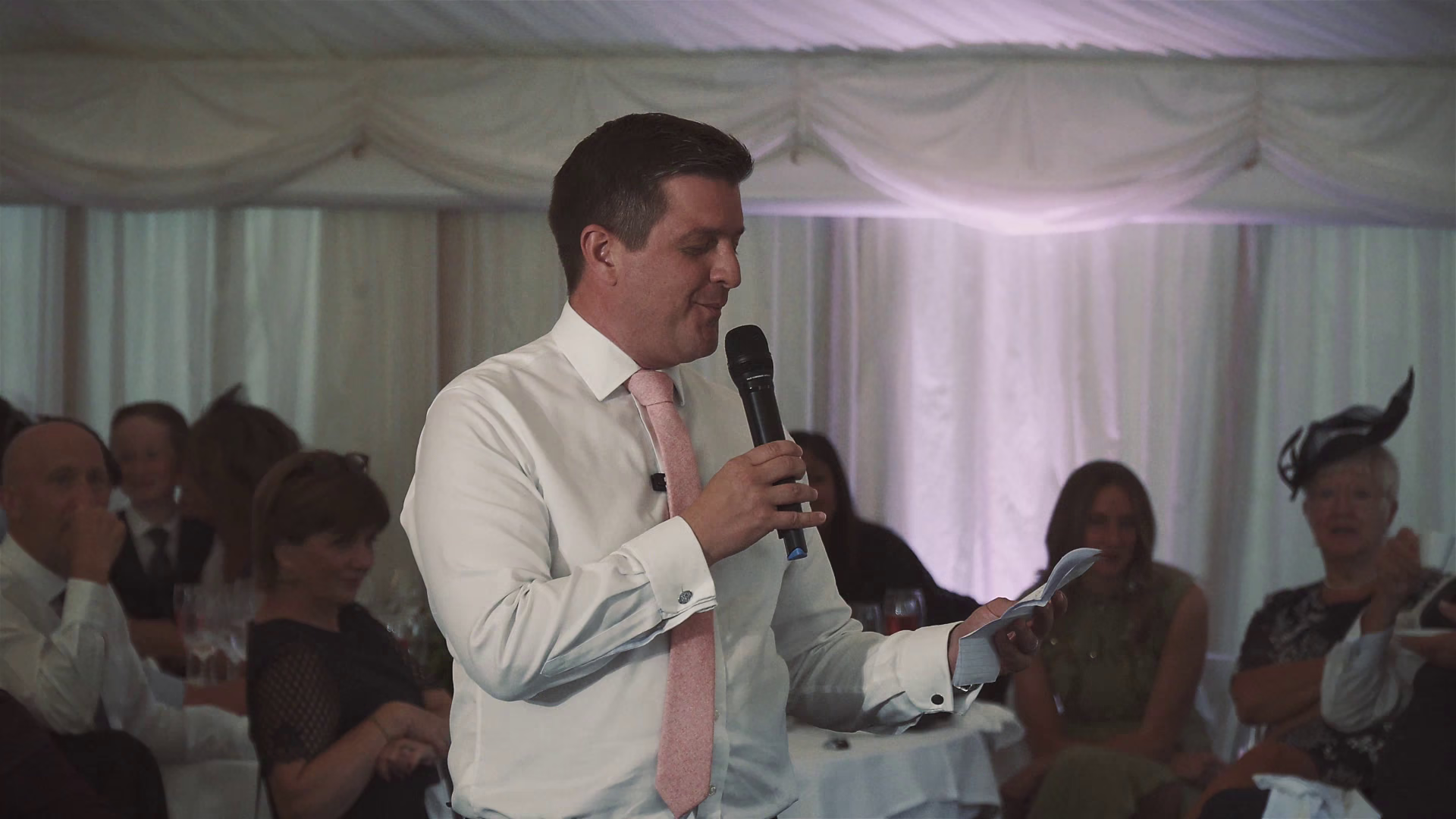
Jo and Andy’s speeches had personality. Looking through the footage, we can see the handwritten notes and the concentration, alongside all the laughter. Those are part of why the films are worth revisiting.
If you are speaking at a wedding, you do not need to turn yourself into a polished presenter for the camera. Give yourself time, use notes if they help and look up when you can. A familiar voice telling a specific story will usually mean far more to the couple than an immaculate performance.
For the couple, it can be a relief to hear that a speech does not need to be edited down to its slickest version to be worth keeping. A pause to gather yourself or laughter that runs on longer than expected can be exactly what makes watching it feel like being back in the room.
What to ask before you book
A few straightforward questions will tell you more than a long list of deliverable names:
- Are the complete speeches included? Ask whether the final film keeps each speech in full or presents selected passages.
- How will the sound be recorded? Find out what your filmmaker needs from the venue and speakers.
- Will you see the people listening? Talk through the planned coverage and what is possible with the crew and layout.
- How will you receive the films? Confirm the viewing and download options so you can keep your own copy.
The same questions are useful whether your wedding is a year away or coming up soon. Jo first contacted us just a fortnight before her wedding, so agreeing the important parts of the coverage early was especially valuable.
Watch the day around the speeches
The speeches make even more sense with the rest of the day around them: the preparations, the ceremony and Jo and Andy’s boat journey to the reception. You can watch their highlights and trailer, and explore a small gallery of freeze frames, in Jo and Andy’s Colchester and Le Talbooth wedding story.
Every image in this article is a frame from our video coverage. These are film stills rather than a separate set of wedding photographs, with the occasional softness that comes from capturing movement.
For more examples of how we bring voices and images together, explore our wedding films. If you already know there is a speech you will want to hear again, tell us about your wedding plans. We can work through the coverage with you.
Keep reading
More from the journal.
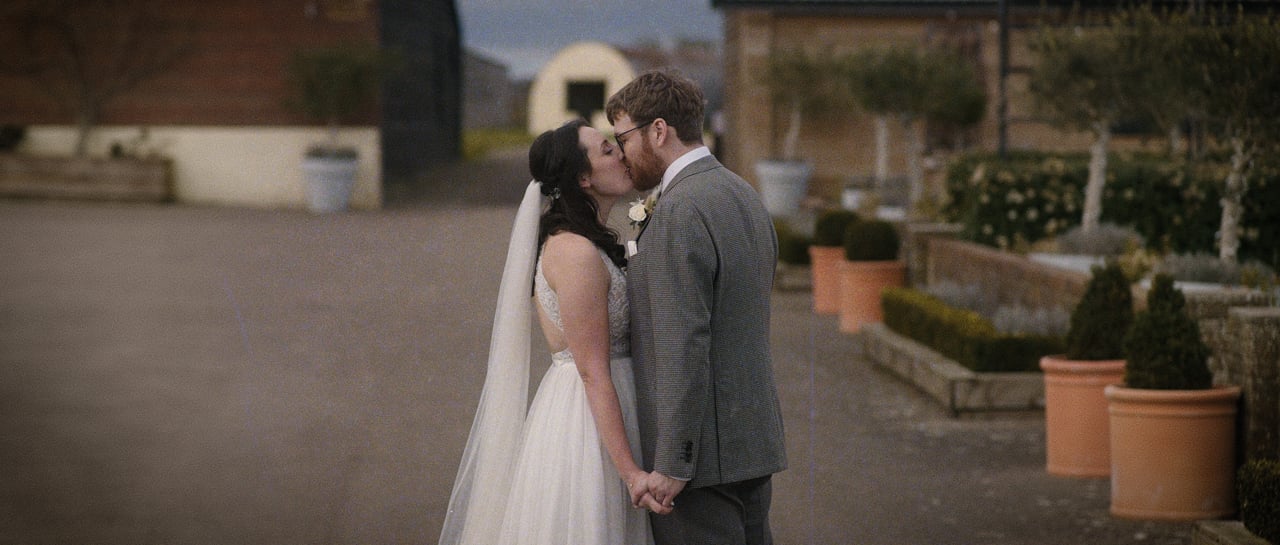
Real wedding: Abby + Luke’s wedding film
A look back at Abby and Luke’s wedding film, from getting ready to the dance floor, and what they had to say about the day.
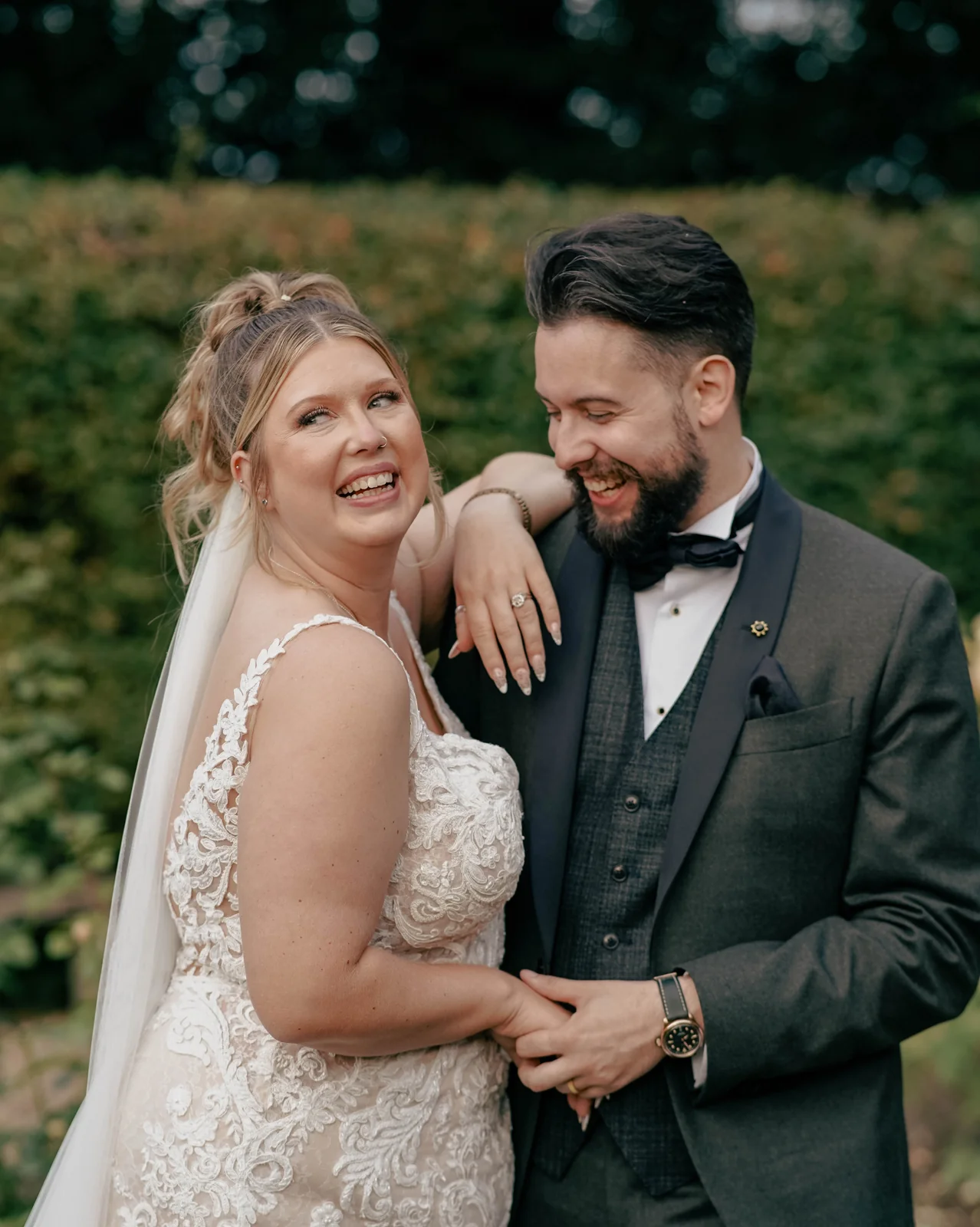
Alice & Alex’s garden wedding: rock, indie & a very good party
A family garden, rose-petal confetti, pizza, crêpes and a marquee full of music. Alice and Alex’s relaxed wedding, photographed and filmed by our team.
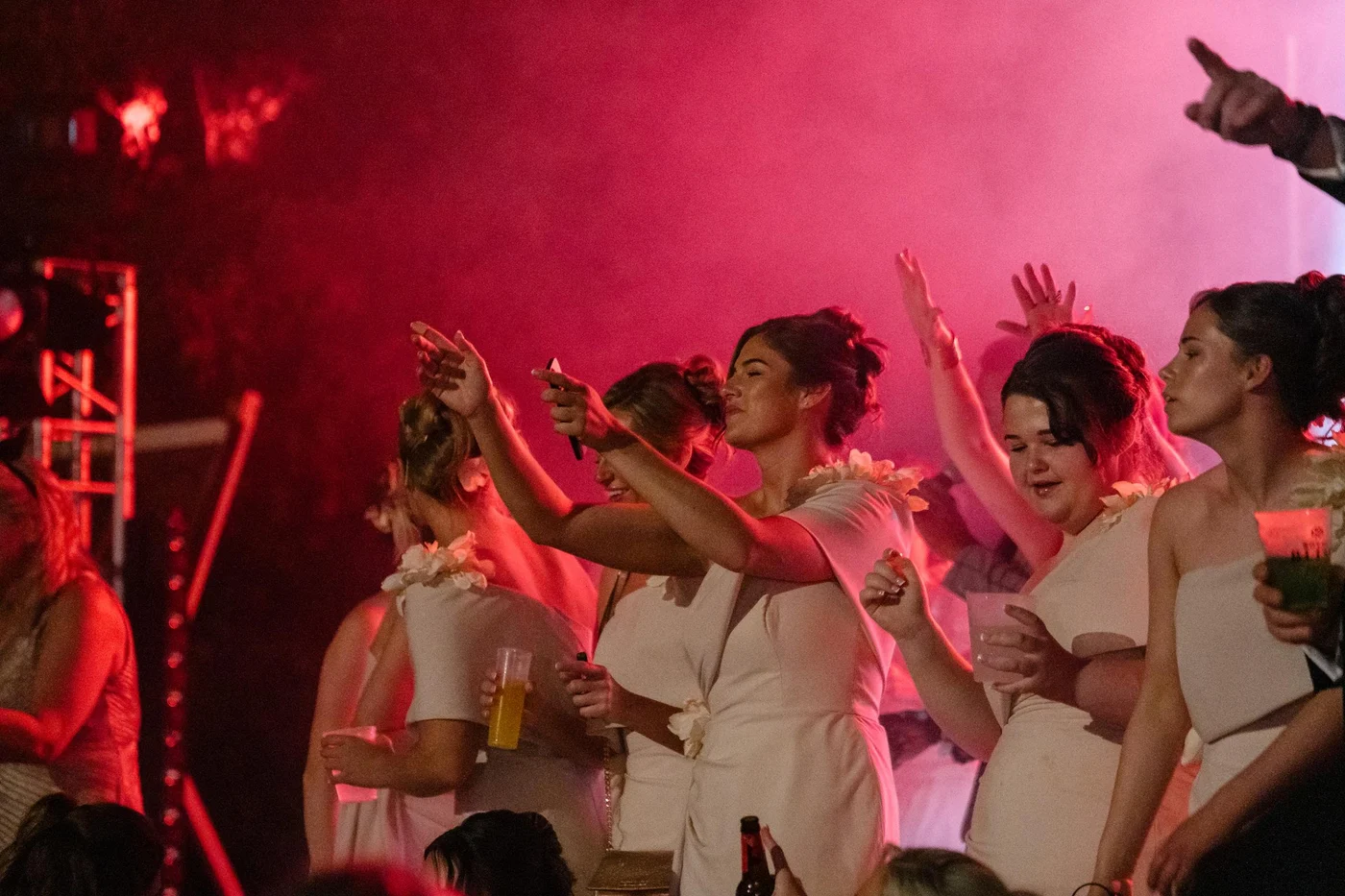
10 wedding moments couples forget to plan for
The big moments usually take care of themselves. These are the small ones couples most often wish they’d captured.
Planning your wedding?
Let’s hear about your day.
Tell us your date, your venue and what you have in mind. Photography, film, content creation, or all three.