
Summer Wedding Suit Guide for Grooms and Guests
The right summer wedding suit is one you can wear comfortably for ten or twelve hours, in sun or a sudden shower, and still look sharp in the last photo of the night. For most grooms and guests in the UK, that means a lightweight cloth (around 7oz to 9oz), a breathable fabric such as linen, cotton or open-weave wool, and a lighter colour like stone, light grey, sage or pale blue, with navy as the safe formal choice.
Below we go through fabrics, colours, dress codes and the practical bits that make a difference on the day. We photograph and film weddings across Essex, Suffolk and London, so we’ve also added a few notes on what looks good on camera, because you’ll be looking at these photos for a long time.
The best fabrics for a summer wedding suit
Fabric matters more than anything else in a summer suit. Bridebook’s summer suit guide points out that a groom can expect to wear his suit for 10 to 12 hours, so comfort isn’t a luxury. Here’s how the main options compare.
| Fabric | Good for | Watch out for |
|---|---|---|
| Linen | The most breathable choice; relaxed garden, beach and destination weddings | Pure linen creases easily |
| Linen blends (e.g. linen, silk and wool) | Linen’s coolness with a more tailored look | Usually costs more than plain linen |
| Cotton and cotton blends | A lightweight all-rounder for unpredictable UK summers | Can look casual in very formal settings |
| Lightweight or open-weave wool | Formal weddings and cooler days; resists creasing | Choose a light weight, not your winter work suit |
| Seersucker | Hot days and beach weddings; the puckered texture lets air move | A bold, casual look that won’t suit every dress code |
What to avoid: thick wool, tweed and velvet. Save those for winter weddings.
Cloth weight in plain English
Suit cloth is often described by weight. Bridebook suggests lighter cloth of about 7oz to 9oz for summer, while heavier cloth of 12oz to 13oz is the kind that works across all seasons. If a shop can tell you the weight, ask. If it can’t, hold the jacket up to the light and feel how stiff the fabric is: lighter, more open fabrics breathe better.
Linings and construction
Traditional linen suits are often made with unlined or lightly lined jackets in pale colours, which is part of why they feel cooler. A full lining traps heat. If you’re buying, look for a half-lined or unlined jacket in a summer fabric.
Summer wedding suit colours that work
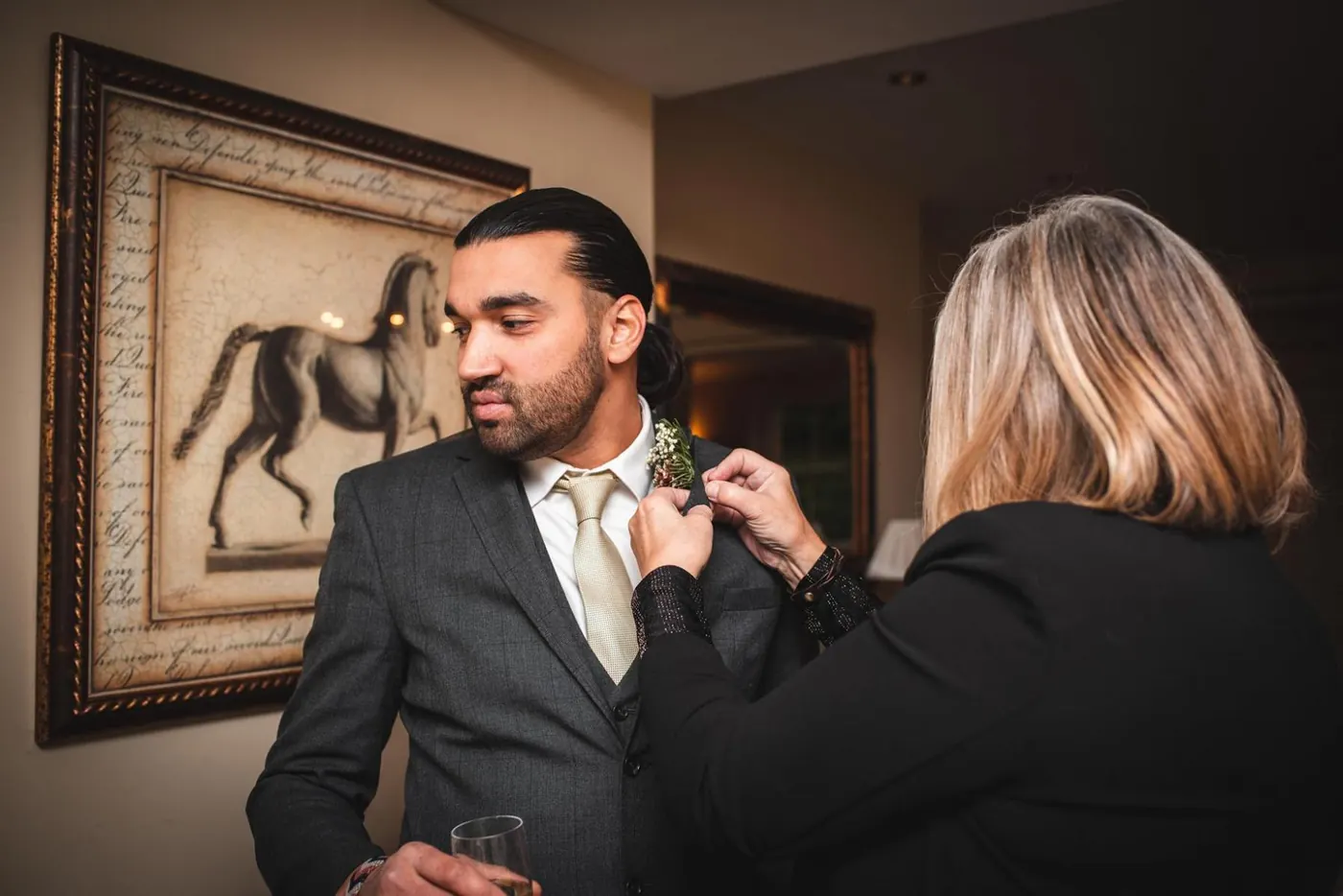
Good summer colours include light grey, stone, tan or beige, sage or olive green, and pale blue. Navy stays the most reliable choice for a more formal wedding, and a classic blue suit is a safe bet for guests.
- White and cream: harder to pull off, and can clash with the bride’s outfit. Guests should avoid white jackets altogether.
- Black: fine for black tie, but it holds heat, so pick a breathable fabric.
- Pastels: best kept to ties, pocket squares and buttonholes.
- Shirts: keep the shirt lighter than the suit.
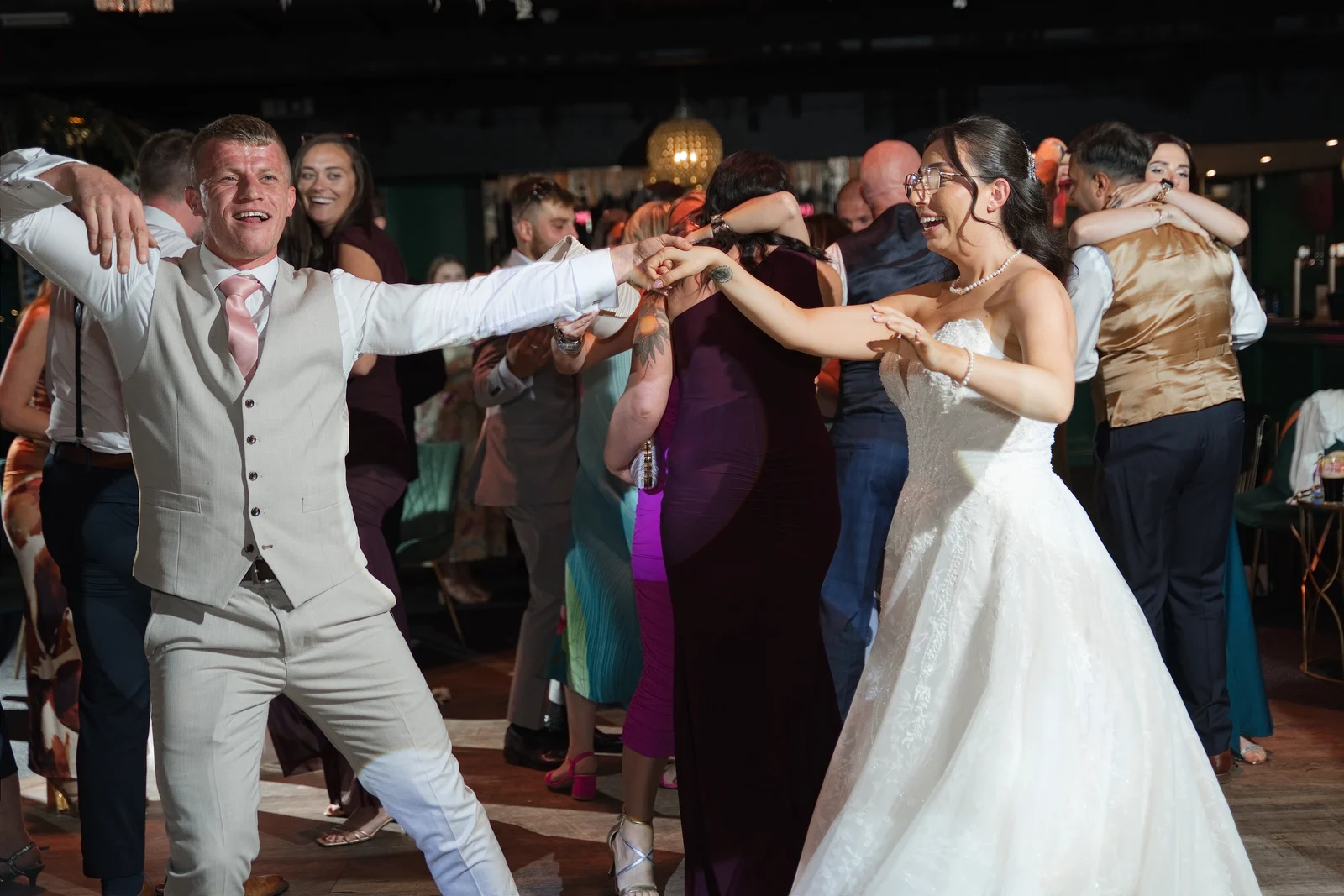
A camera note: very pale suits in bright midday sun can lose detail, and very dark suits in deep shade can lose shape. Mid-tones such as light grey, sage and soft blue tend to photograph beautifully in all kinds of light, and they sit nicely next to most wedding dresses and bridesmaid colours.
Summer wedding suits for grooms
As the groom, you’ll be in nearly every photo, so fit and comfort come first. A few practical points:
- Hire or buy: hiring from a national chain or a local menswear specialist keeps costs down and handles the logistics. Bridebook suggests starting the process two to three months before the wedding. Buying off the peg is also an option, and you’ll have a summer suit for years.
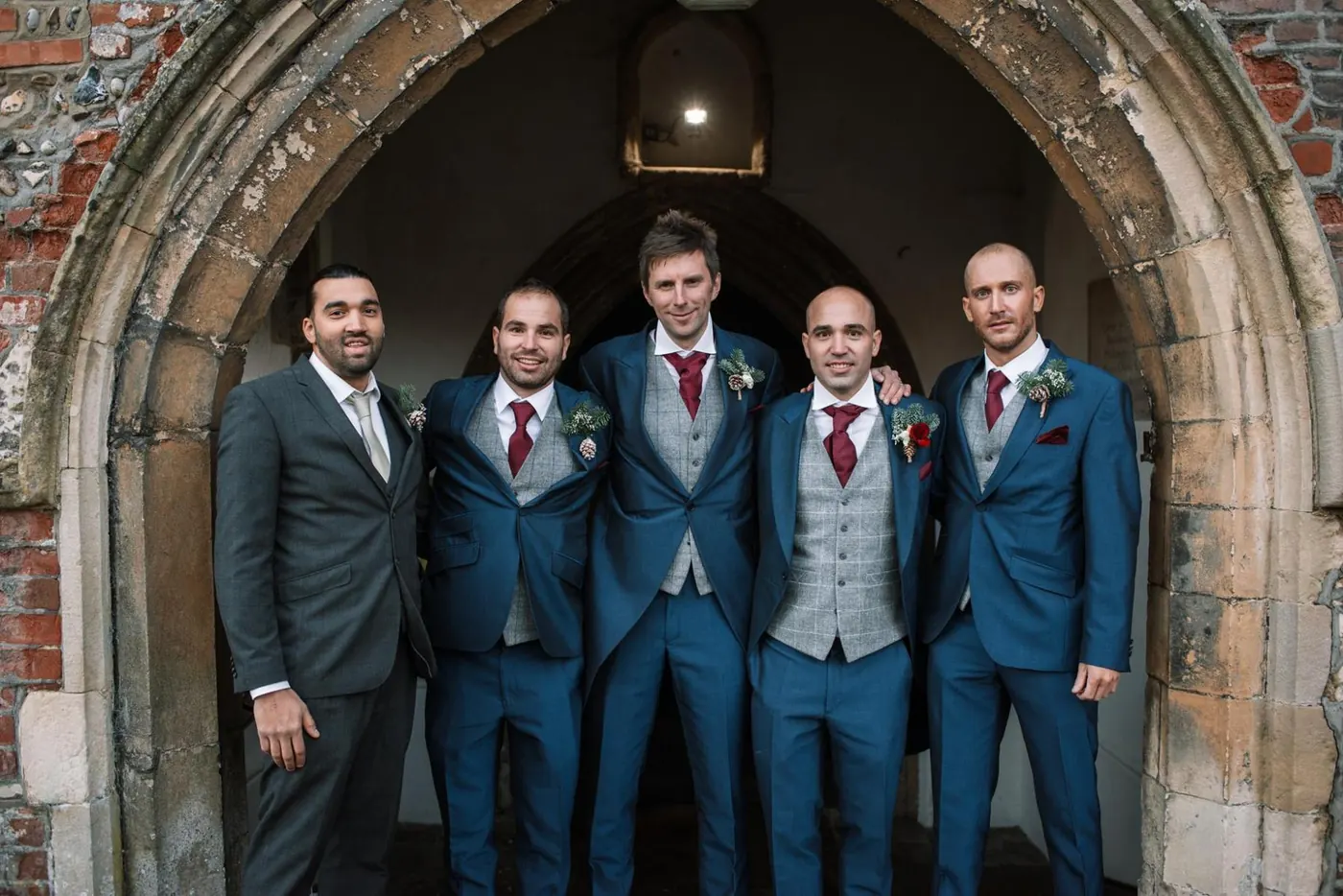
- Stand apart: the groom should look distinct from his groomsmen, through a different colour, a waistcoat, or a different tie or buttonhole.
- Groomsmen: they don’t need identical suits unless the day is very formal, but something should link them, such as a shared colour palette or matching accessories.
- Returning hire suits: if you’re heading straight off on honeymoon, ask an usher or the best man to take your suit back.
Staying cool on the day
Summer heat in a suit is real, especially through the ceremony, photos and speeches. Some simple things help:
- Agree with your partner when jackets can come off, for example after the formal group photos. Guests usually follow the groom’s lead.
- Bring a spare shirt for the evening if it’s hot.
- Ask your venue about shade for the drinks reception, and for group photos. Shade is kinder to faces too: nobody squints.
- Do a full try-on, shoes included, well before the day. New shoes in summer heat are a classic source of blisters by the first dance.
When we plan couple portraits for summer weddings, we’ll often suggest later in the day when the light softens and it’s cooler. Our wedding day timeline guide explains how to fit that in.

What to wear as a summer wedding guest
Check the invitation first. Common dress codes break down like this:
- Black tie: a black or midnight-blue dinner suit. Choose a lighter cloth if you can.
- Lounge suit: a standard single- or double-breasted suit, the most common code in the UK.
- Smart casual: more room to interpret, for example a smart blazer with chinos.
- No dress code: lean towards a suit. It’s easier to take off a tie than to wish you’d worn one.
If you can, keep one good lightweight suit for weddings rather than wearing your office suit. Try the whole outfit on together ahead of time, and if the couple has mentioned a colour scheme for the wedding party, steer clear of copying it exactly. For dresses, our summer wedding guest dress guide covers the other side of the wardrobe.
Quick checklist for a summer wedding suit
Lightweight cloth (about 7oz to 9oz). Breathable fabric: linen, cotton or open-weave wool. Half-lined or unlined jacket. A lighter or mid-tone colour, or navy for formal days. Shirt lighter than the suit. Shoes worn in. A plan for when jackets come off.
A summer wedding suit that looks good in photos
From behind the camera, the suits that look best are the ones people forget they’re wearing. If you’re comfortable, you relax, and relaxed is what makes natural photos and film. Get the fit right at the shoulders and sleeves, keep the fabric light, and choose a colour that sits well with the rest of the wedding.
If you’re planning a summer wedding and want relaxed, documentary photos and film of the day, have a look at our packages or get in touch. We’d love to hear what you’re planning.
Sources: Bridebook, summer wedding suits; Suit Direct, fabric guide; Proper Cloth, best fabrics for summer wedding suits. Checked October 2026.
Related guides
More on dresses & suits.
How to Choose a Wedding Dress That Looks Even Better in Photos
When to start shopping, what to budget, and how to pick a dress that moves and photographs beautifully.
Wedding Outfits for Winter Wedding Guests: Layer Like a Pro
How to layer, which fabrics and colours to pick, and the coats and shoes that get you warmly through a winter wedding.
Wedding Guest Dresses UK: How to Pick One for Any Dress Code
Every UK dress code decoded for guests, plus colours to avoid, hats, church rules and seasonal tips.
Planning your wedding?
Let’s hear about your day.
Tell us your date, your venue and what you have in mind. Photography, film, content creation, or all three.